GE refrigerators depend on a complete door seal, clear internal airflow, sensible loading, and normal ventilation around the cabinet. Small habits can prevent avoidable warm-cabinet and condensation complaints.
Most refrigerator upkeep comes down to three habits: keep the door sealing and closing fully, leave room for air to move inside and around the cabinet, and judge temperature by measurement rather than touch. If drift, frost, or condensation continues after those basics, it is time to book a diagnosis.
GE refrigerators depend on a complete door seal, clear internal airflow, sensible loading, and normal ventilation around the cabinet. Small habits can prevent avoidable warm-cabinet and condensation complaints.
| Symptom | What it can point to | What you can check |
|---|---|---|
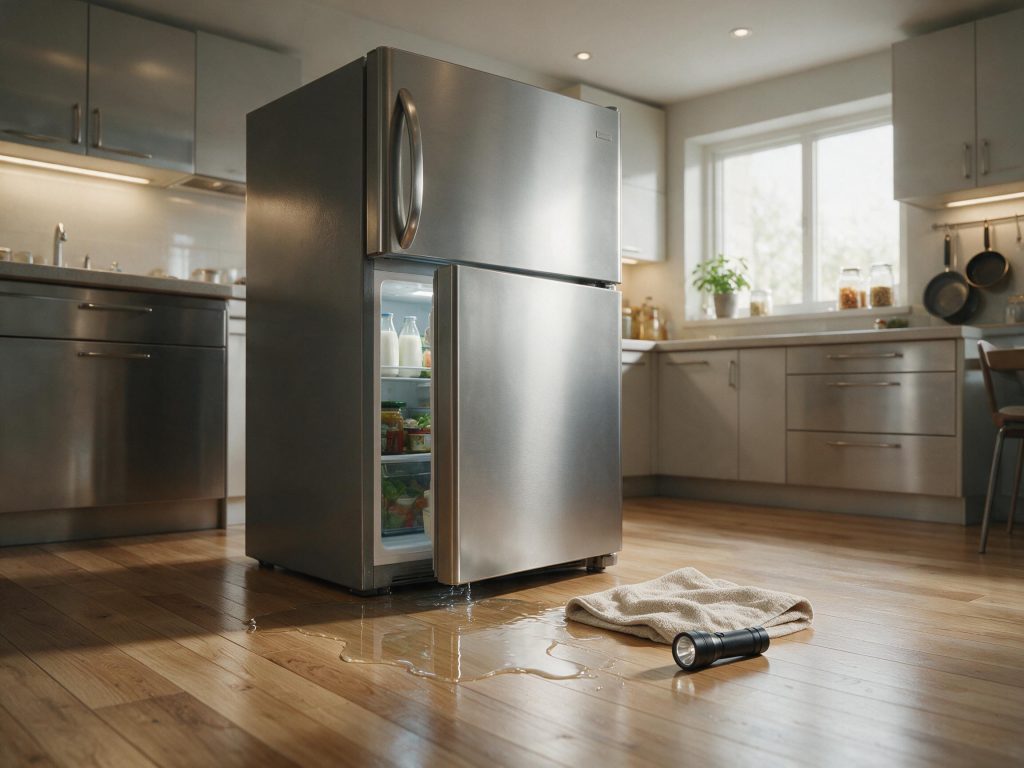
| Door does not swing shut by itself | Level of the cabinet, or a large item in the way | GE guidance says the door should close on its own from about 45 degrees; leveling legs or rollers can be adjusted. |
| Cold air feels weak at the back | Tall items blocking airflow | Move tall packages forward so cold air can circulate. |
| Cabinet runs warm in a hot or cold room | Room temperature outside the usual range | GE notes performance can suffer when the room is below 60F or above 110F. |
| Interior light stays on with the door open | Light adding heat and affecting cooling | The light should turn off when the door is open about an inch; if it does not, book service. |
| Light off inside the fresh-food section | No power | Check that the plug is seated and the outlet is live. |
GE refrigeration spans many generations and control platforms. Consumer-facing messages such as `PF`, `FF`, `CI`, `DE/dE`, and `CC` are not interchangeable with the multi-digit service diagnostics used by some French-door families. Keep every code tied to the exact model and context. Measured temperatures are more useful than a quick touch test. If one compartment is normal and another is not, say so. If the problem followed a power interruption, filter change, or prolonged door opening, record that too.
Maintenance should preserve normal airflow, water flow, sealing, loading, cleanliness, and utility conditions. It should not become disassembly.
GE describes the door gaskets on many models as magnetic and seated in a groove-style retaining channel. Wipe them so crumbs and spills do not hold the door slightly open, and take a look at the groove for gaps. Replacements can eventually be needed on any refrigerator, and a large item that stops the door closing completely is easier to fix than a worn gasket.
Many GE manuals ask for at least one inch of clearance on each side, at the top, and at the back; check your owner’s manual for the figure on your model. A fuller refrigerator recovers faster after the door opens because there is less warm air to cool, although tall items at the back should not block the airflow.
GE says most units made since 2001 have coils that do not need cleaning, while compact and smaller top-freezer models still do. If your model is in the second group, unplug the refrigerator first. Cleaning the coils is the one place where dust, not food, drives a cooling complaint.
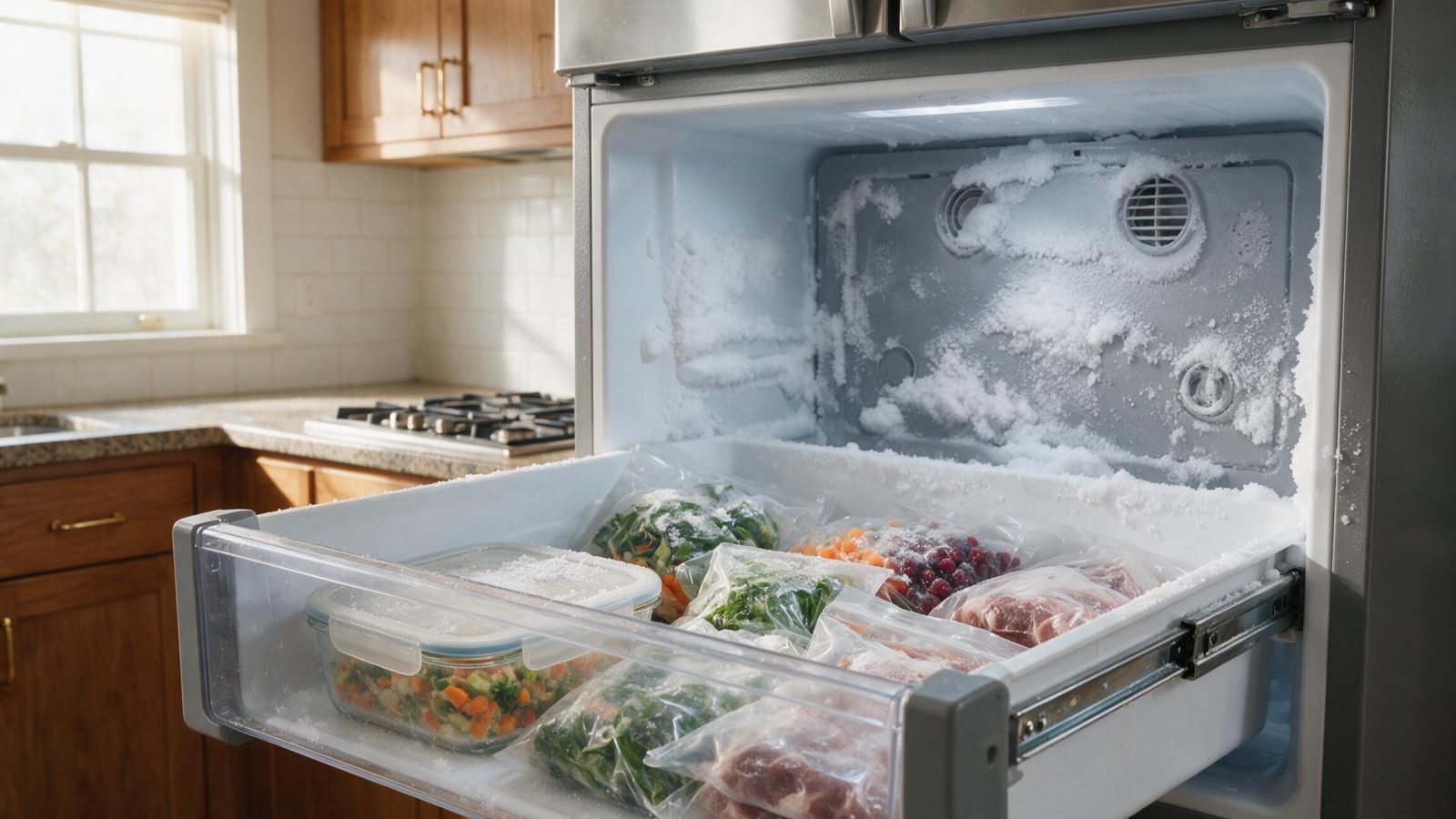
If temperature drift, frost, condensation, or fan noise persists after routine care, move from maintenance to diagnosis. Allow 24 hours for the cabinet to settle after any control change before judging whether it worked.
If the same symptom returns after correct routine care, move to diagnosis rather than stronger chemicals, repeated resets, or random parts.
Leave built-in, stacked, or tightly fitted appliances installed unless the service team specifically requests access. Moving an appliance without a plan can disturb flooring, cabinetry, gas, water, drain, vent, or electrical connections and create a second problem.
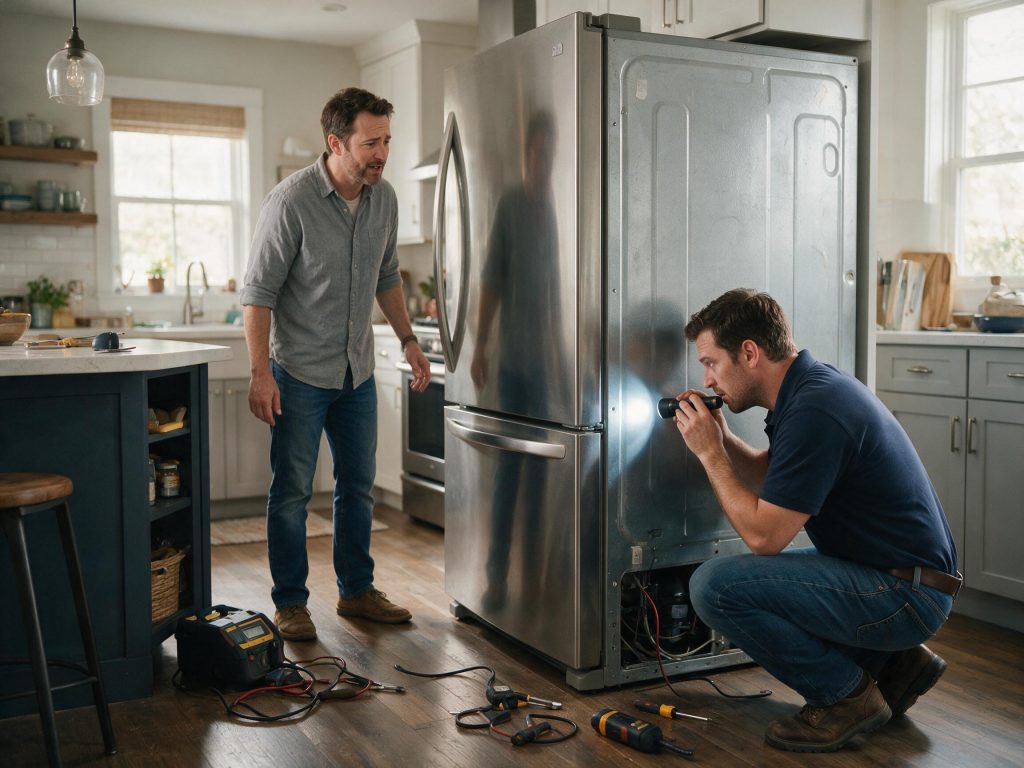
The technician should reproduce the symptom or use your observations to select a narrow test path. That may involve comparing sensor readings, fan or pump commands, control output, airflow, water flow, ignition behavior, or stored diagnostics. The goal is to replace only what testing supports.
Write down:
– complete GE model number;
– exact symptom in one sentence;
– when it began;
– whether it is constant or intermittent;
– what related function still works normally;
– any displayed code/message before reset;
– any recent power, water, gas, venting, cleaning, filter, or installation event.
Do not clear codes before documenting them, do not order a part because another GE owner had a similar symptom, and do not apply one code meaning across unrelated appliance families. Some GE displays are status or operating messages rather than repair faults.
One controlled owner-level check is useful when it answers a question. Repeating resets or disassembling the appliance usually removes evidence rather than adding it.
One normal manual-approved reset can be useful after a temporary control interruption. Record the code or display state first. If the same symptom returns, repeated resets are not a repair.
Usually no. Similar symptoms can come from different components, installation conditions, or external utilities.
No. Keep homeowner checks external and model-appropriate.
GE suggests about 37F for fresh food and 0F for the freezer. On models with a dial or digital control, turn it up one number for colder; on models showing actual temperature, lower it one degree.
A new unit needs roughly 24 hours to cool down and stabilize, and the same wait applies after you adjust a control. If it is still warm after that with correct settings, service may be needed.
Not on most units made since 2001, according to GE. Compact and smaller top-freezer models still do, and you should unplug the unit before cleaning.
One normal manual-approved reset can be useful after a temporary control interruption. Record the code or display state first. If the same symptom returns, repeated resets are not a repair.
Usually no. Similar symptoms can come from different components, installation conditions, or external utilities.
No. Keep homeowner checks external and model-appropriate.
Moisture and detergent residue can collect in the door gasket, dispenser, and drain-filter area on supported GE front-load models. A repeatable cleaning routine helps…
A dryer needs a clear path for hot moist air. Cleaning the lint filter is essential, but a crushed transition duct or restricted exterior…
Spills and cleaning moisture can make a gas burner slow to light even when the ignition system is healthy. Correct cap placement and complete…
Request a repair on our homepage booking form, or call us and we’ll help right away.