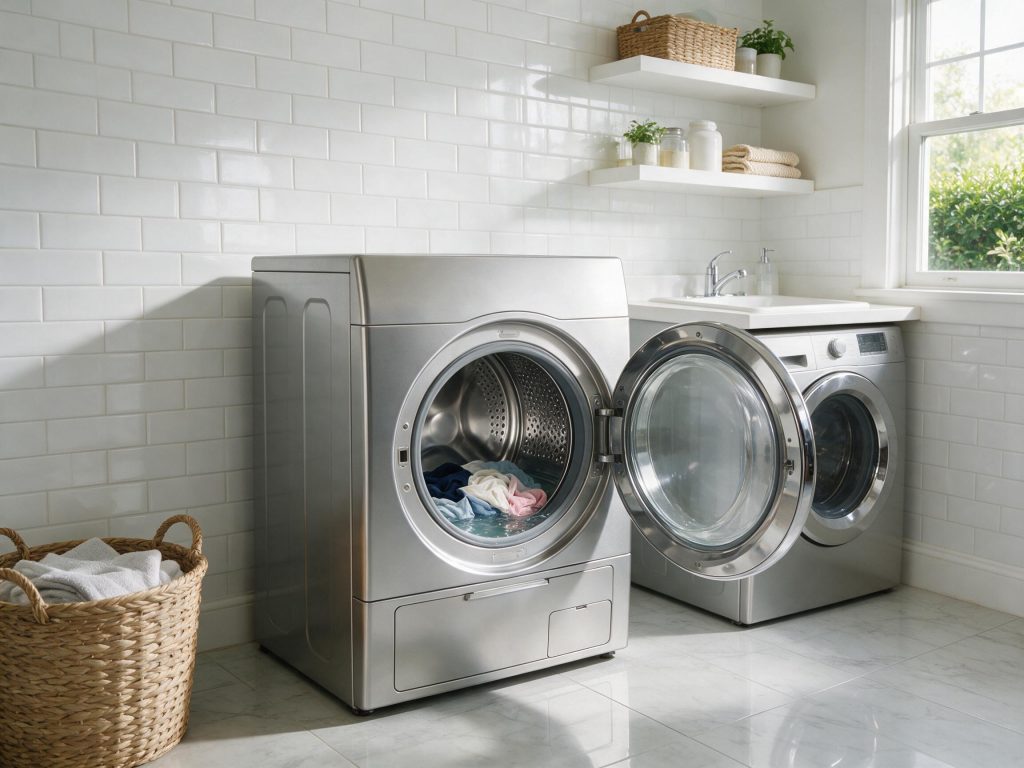
A dryer needs a clear path for hot moist air. Cleaning the lint filter is essential, but a crushed transition duct or restricted exterior termination can still cause long drying and high temperatures.
A dryer vent needs to stay clear from the dryer to the outdoors, not only at the lint screen. Clean the lint filter after every use, and have the full duct cleaned at least once a year, even without a warning.
A dryer needs a clear path for hot moist air. Cleaning the lint filter is essential, but a crushed transition duct or restricted exterior termination can still cause long drying and high temperatures.
| Symptom | What it can point to | What you can check |
|---|---|---|
| Long drying time and a hot dryer | Restricted venting | Check the transition duct, the exterior cap, and the lint screen. |
| Condensation around the door | Too many elbows or too long a run | Follow the model’s installation instructions for allowed length. |
| Check Vent alert on sensor models | Low airflow detected | Clean the vent as soon as possible. |
| Lint filter holds water or film | Fabric softener coating | Wash the filter in warm soapy water and dry it thoroughly. |
| Collapsed duct | Flexible white plastic | Replace with solid or flexible metal duct. |
GE dryers may store numeric GFD-family codes or E-code families depending on platform. A code should not be published or linked without model context. For symptom work, prove airflow and heat separately before assuming a board or heater. If the dryer smells electrically hot, repeatedly trips power, or shuts down from heat, stop normal testing.
Maintenance should preserve normal airflow, water flow, sealing, loading, cleanliness, and utility conditions. It should not become disassembly.
GE recommends solid metal vent pipe, 4 inches in diameter. Flexible metal works but adds drying time, while flexible white plastic can collapse, restrict airflow, and contribute to lint buildup and early heater failure. Exceeding the allowed number of elbows or vent length can cause condensation around the door, so follow the installation instructions for your model.
GE’s steps are to unplug the dryer, disconnect the duct, vacuum it, and confirm the wall cap flaps move freely with no nest inside. A blocked vent traps heat and moisture and can make the dryer hot to the touch. GE notes that heavy lint buildup is a potential fire hazard.
GE says never to run a gas dryer without its vent, because carbon monoxide could enter the room.
If airflow remains weak or the dryer overheats despite a clear external path, the internal airflow/heating system should be inspected.
If the same symptom returns after correct routine care, move to diagnosis rather than stronger chemicals, repeated resets, or random parts. Weak airflow, high heat, and a hot cabinet together are the combination to take seriously.
Drying time depends on heat type, load size, fabric, wetness, and the condition of the venting. A washer that spins at a low speed leaves more water in the clothes, which lengthens drying even with a perfect vent. GE suggests a higher or extended spin before blaming the dryer.
On models with a sensor for low airflow, a Check Vent alert means the vent is blocked, and GE says to clean it as soon as possible, then at least once a year regardless.
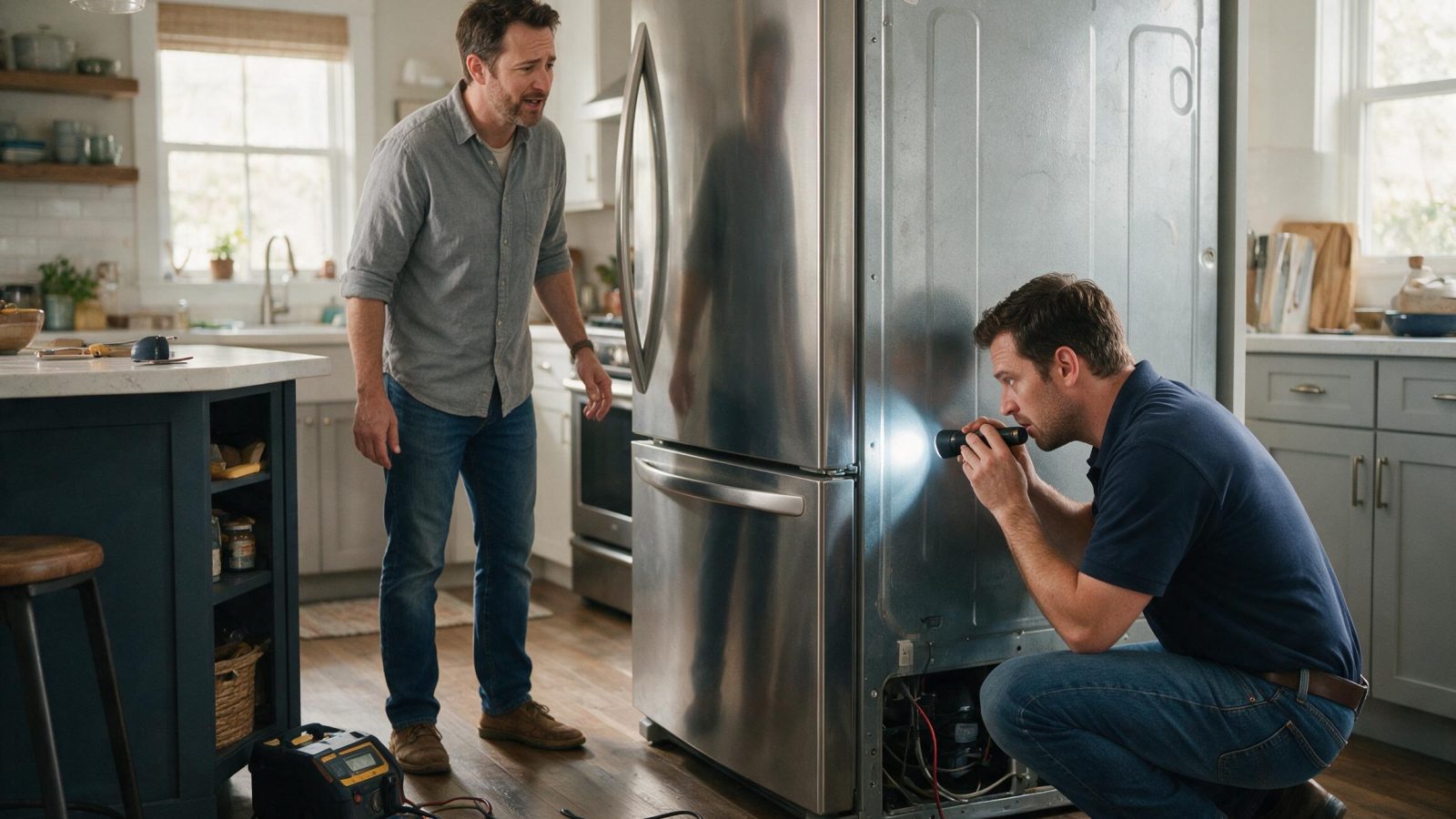
Leave built-in, stacked, or tightly fitted appliances installed unless the service team specifically requests access. Moving an appliance without a plan can disturb flooring, cabinetry, gas, water, drain, vent, or electrical connections and create a second problem.
The technician should reproduce the symptom or use your observations to select a narrow test path. That may involve comparing sensor readings, fan or pump commands, control output, airflow, water flow, ignition behavior, or stored diagnostics. The goal is to replace only what testing supports.
Write down:
– complete GE model number;
– exact symptom in one sentence;
– when it began;
– whether it is constant or intermittent;
– what related function still works normally;
– any displayed code/message before reset;
– any recent power, water, gas, venting, cleaning, filter, or installation event.
Do not clear codes before documenting them, do not order a part because another GE owner had a similar symptom, and do not apply one code meaning across unrelated appliance families. Some GE displays are status or operating messages rather than repair faults.
One controlled owner-level check is useful when it answers a question. Repeating resets or disassembling the appliance usually removes evidence rather than adding it.
One normal manual-approved reset can be useful after a temporary control interruption. Record the code or display state first. If the same symptom returns, repeated resets are not a repair.
Usually no. Similar symptoms can come from different components, installation conditions, or external utilities.
No. Keep homeowner checks external and model-appropriate.
GE says at least once a year, and as soon as possible after a Check Vent alert. The lint filter should be cleaned after every use.
GE warns it can collapse and restrict airflow. Solid metal is recommended, and flexible metal works with a longer drying time.
Too many elbows or too long a vent can cause condensation. Follow the installation instructions for the allowed length.
One normal manual-approved reset can be useful after a temporary control interruption. Record the code or display state first. If the same symptom returns, repeated resets are not a repair.
Usually no. Similar symptoms can come from different components, installation conditions, or external utilities.
No. Keep homeowner checks external and model-appropriate.
Moisture and detergent residue can collect in the door gasket, dispenser, and drain-filter area on supported GE front-load models. A repeatable cleaning routine helps…
Spills and cleaning moisture can make a gas burner slow to light even when the ignition system is healthy. Correct cap placement and complete…
A one-cabinet wash/dry system depends on user-maintained drain and lint paths. Ignoring filter messages can turn a small maintenance task into slow draining, longer…
Request a repair on our homepage booking form, or call us and we’ll help right away.