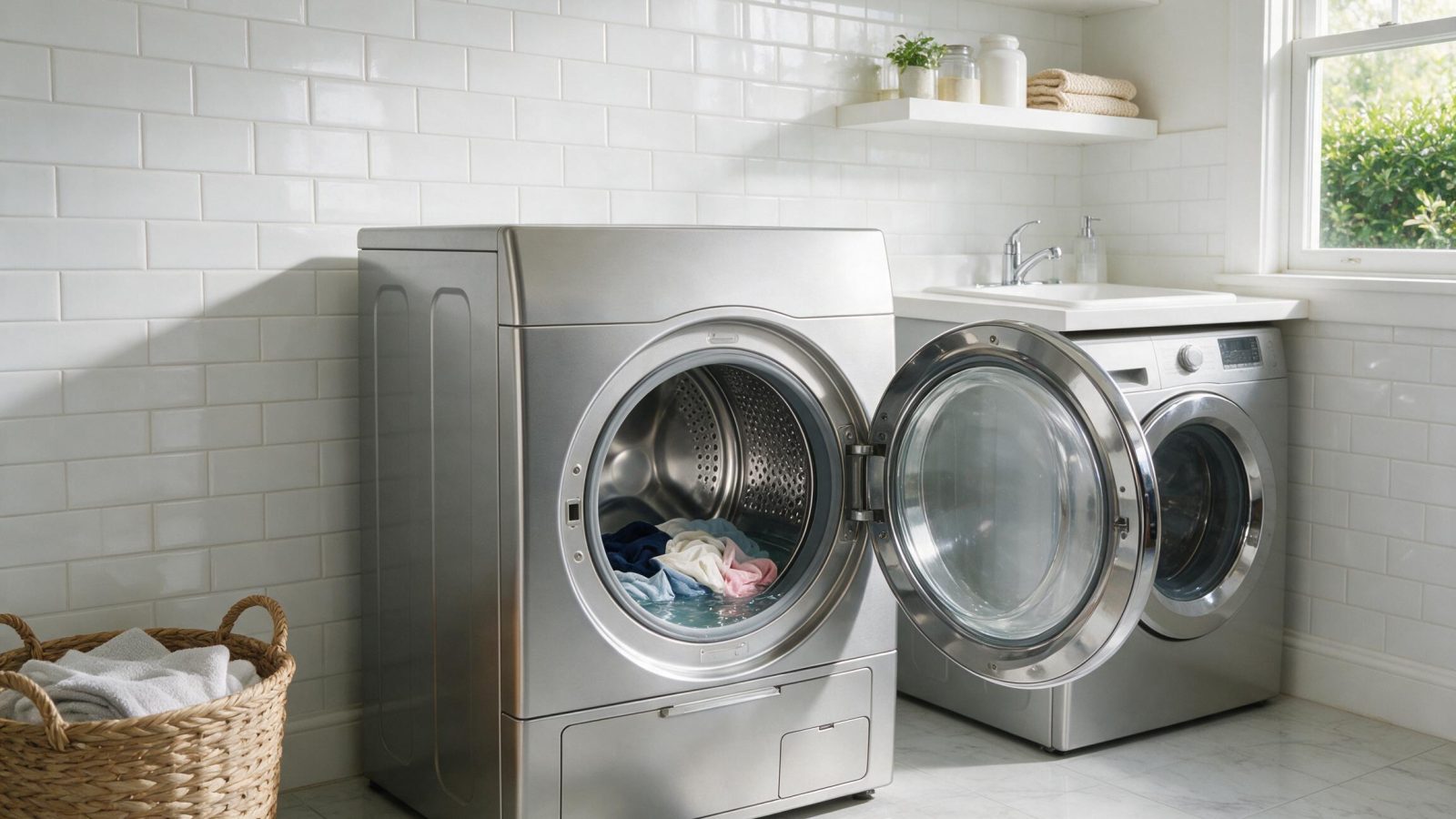
Moisture and detergent residue can collect in the door gasket, dispenser, and drain-filter area on supported GE front-load models. A repeatable cleaning routine helps reduce odor without aggressive chemicals.
Musty odor in a GE front-load washer can trace back to detergent, trapped moisture, or residue in the gasket, dispenser, and drain-filter area, all of which can be reduced with a regular routine. Use liquid HE detergent in the right amount and give the tub and gasket a periodic clean before reaching for stronger chemicals.
Moisture and detergent residue can collect in the door gasket, dispenser, and drain-filter area on supported GE front-load models. A repeatable cleaning routine helps reduce odor without aggressive chemicals.
| Odor or symptom | What it can point to | What you can safely check |
|---|---|---|
| Soapy, sour smell after cycles | Excess suds leaving soap trapped in the outer tub | Switch to the correct amount of liquid HE detergent |
| Smell concentrated at the door | Moisture and residue in the gasket and the holes behind it | Wipe the gasket and holes with mild detergent or diluted vinegar, then rinse with warm water |
| Residue in the dispenser drawer | Product buildup | Clean the drawer once or twice a month |
| Musty smell with a drain hose pushed deep into the standpipe | Water siphoning back into the washer | Clip the hose to the side of the standpipe |
| Odor with small items or slow drainage | A clogged pump filter | Check the pump filter for small objects where your manual allows |
GE washers span front-load, top-load, HydroWave/CleanSpeak-era platforms, and newer connected designs. Numeric service codes can mean different things across families, while messages such as `H2O SUPPLY` can point toward owner-checkable water conditions. Record whether the machine fills, drains, locks, and attempts spin.
GE says excess suds leave soap trapped in the outer tub, which can become the source of a lingering smell. Front-load washers are designed for liquid HE detergent in the right amount, so more product does not mean cleaner clothes.
Clean the tub monthly using the Self Clean cycle with 1 cup of bleach or washer cleaner on models that have one, or a large Heavy or Cotton empty cycle if yours does not. Check your use-and-care manual for the exact cycle name.
Maintenance should preserve normal airflow, water flow, sealing, loading, cleanliness, and utility conditions. It should not become disassembly. Residue in the dispenser drawer is part of that routine, so check it once or twice a month rather than only when an odor appears. Remove wet items promptly after a cycle as well, since damp laundry left in the drum keeps moisture around the gasket and adds to the smell.
Recurring odor with standing water, slow draining, or leakage may need diagnosis rather than stronger cleaners.
If the same symptom returns after correct routine care, move to diagnosis rather than stronger chemicals, repeated resets, or random parts.
The standpipe is easy to overlook. A drain hose pushed too far into the standpipe can siphon water back and cause a musty smell, and clipping the hose to the side of the pipe prevents it.
GE introduced the UltraFresh Vent System with Odor Block on front-load models in 2020. If your washer has that feature, the manual explains how it works with the door and gasket, and it does not replace wiping or tub cleaning.
Leave built-in, stacked, or tightly fitted appliances installed unless the service team specifically requests access. Moving an appliance without a plan can disturb flooring, cabinetry, gas, water, drain, vent, or electrical connections and create a second problem.
The technician should reproduce the symptom or use your observations to select a narrow test path. That may involve comparing sensor readings, fan or pump commands, control output, airflow, water flow, ignition behavior, or stored diagnostics. The goal is to replace only what testing supports.
Write down:
– complete GE model number;
– exact symptom in one sentence;
– when it began;
– whether it is constant or intermittent;
– what related function still works normally;
– any displayed code/message before reset;
– any recent power, water, gas, venting, cleaning, filter, or installation event.
Do not clear codes before documenting them, do not order a part because another GE owner had a similar symptom, and do not apply one code meaning across unrelated appliance families. Some GE displays are status or operating messages rather than repair faults.
One controlled owner-level check is useful when it answers a question. Repeating resets or disassembling the appliance usually removes evidence rather than adding it.
One normal manual-approved reset can be useful after a temporary control interruption. Record the code or display state first. If the same symptom returns, repeated resets are not a repair.
Usually no. Similar symptoms can come from different components, installation conditions, or external utilities.
No. Keep homeowner checks external and model-appropriate.
GE suggests monthly, using the tub-clean cycle with 1 cup of bleach or washer cleaner on models that have one, or a large empty Heavy or Cotton cycle.
Yes. Excess suds leave soap trapped in the outer tub. Use liquid HE detergent in the amount the manual specifies.
GE says to clean the gasket and the holes behind it with mild detergent, diluted bleach, or diluted vinegar, then rinse with warm water.
One normal manual-approved reset can be useful after a temporary control interruption. Record the code or display state first. If the same symptom returns, repeated resets are not a repair.
Usually no. Similar symptoms can come from different components, installation conditions, or external utilities.
No. Keep homeowner checks external and model-appropriate.
A dryer needs a clear path for hot moist air. Cleaning the lint filter is essential, but a crushed transition duct or restricted exterior…
Spills and cleaning moisture can make a gas burner slow to light even when the ignition system is healthy. Correct cap placement and complete…
A one-cabinet wash/dry system depends on user-maintained drain and lint paths. Ignoring filter messages can turn a small maintenance task into slow draining, longer…
Request a repair on our homepage booking form, or call us and we’ll help right away.