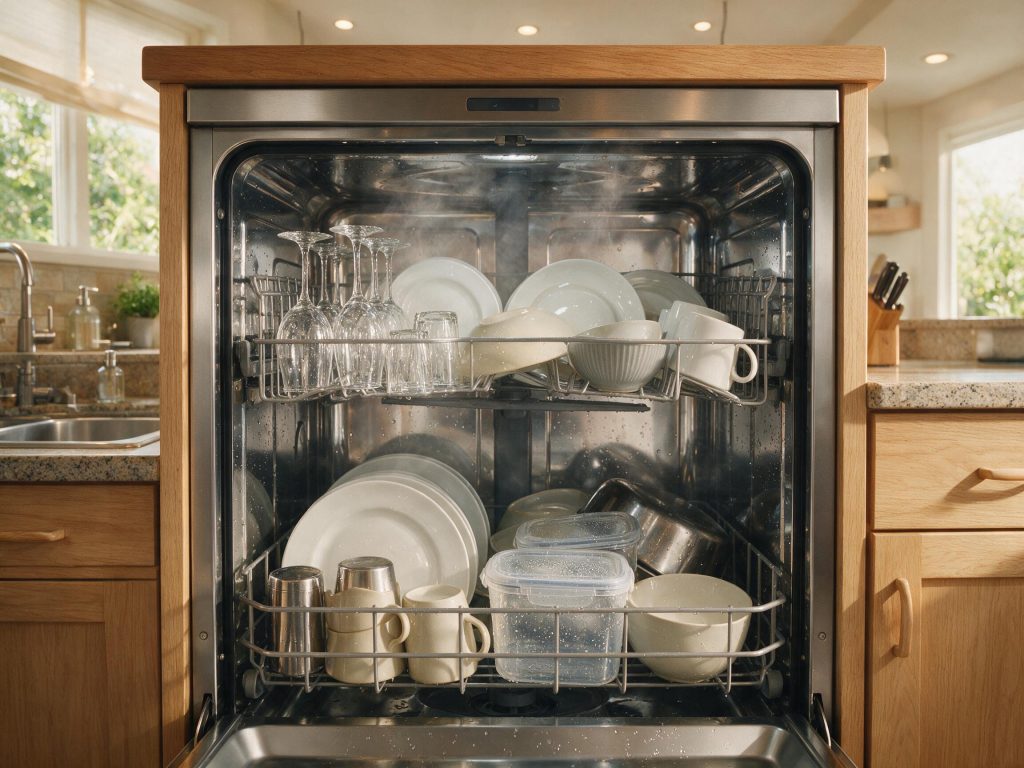

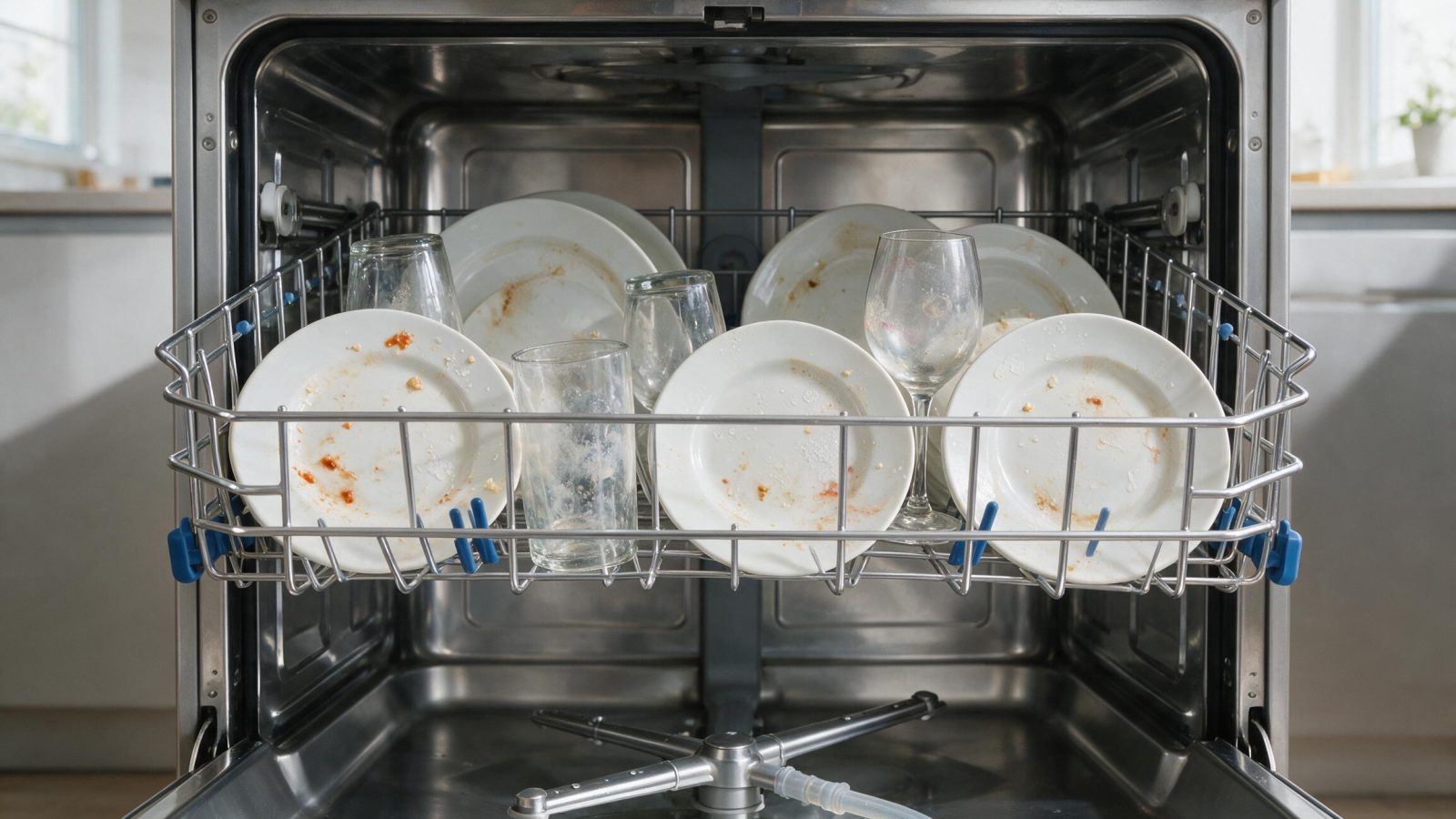
Poor wash results are often a system problem rather than one failed part. The dishwasher needs hot water, correct detergent chemistry, adequate fill, unrestricted spray, proper loading, and effective drainage to clean consistently.
A dishwasher can complete an entire cycle, beep normally, and still leave food behind. That does not automatically mean the wash motor is weak. Cleaning performance depends on water temperature, pressure, detergent, spray-arm movement, loading, soil level, filtration, and drainage all working together.
GE’s troubleshooting guidance specifically emphasizes incoming hot water, water pressure, wash-cycle selection, detergent use, and installation conditions.
Hot water activates detergent and helps loosen grease and dried food.
GE commonly specifies incoming dishwasher water around 120°F for effective washing on many models. Check the model documentation and home water-heater settings before making changes.
A practical step is to run the kitchen faucet until hot water arrives, then start the dishwasher so the first fill is not sitting in a long line of cold water.
A new or recently remodeled kitchen can have an installation error.
GE states that its dishwashers should be connected to the hot-water line, not the cold-water line, because the dishwasher alone cannot always raise cold incoming water enough for optimum washing.
If the problem has existed since installation, verify the plumbing connection.
Too little water means spray arms cannot develop the intended wash action.
Possible reasons include:
On some models, an H2O-related display indicates inadequate water during the fill phase.
A perfect dishwasher cannot clean surfaces hidden behind other dishes.
Avoid:
Use the loading pattern in the owner’s manual for the rack design you have.
Spin accessible spray arms by hand with the dishwasher off. They should not hit dishes or racks.
Inspect spray holes for food particles or mineral deposits. A blocked jet reduces wash coverage, and a cracked spray arm can direct water incorrectly.
Clean only according to model instructions.
More detergent is not always better. Too much can leave residue; too little may not handle heavy soil.
Detergent performance also depends on water hardness and freshness. Old detergent that has absorbed moisture can clump or dissolve poorly.
If dishes have a sandy grit, GE notes that insufficiently hot water can prevent detergent from dissolving effectively.
Rinse aid is mainly associated with spotting and drying, but overall finish quality can improve when water sheets off dishes rather than remaining in droplets.
Fill the rinse-aid dispenser if your dishwasher is designed to use it and follow the dosage guidance for local water conditions.
A dirty filter can recirculate debris or restrict wash/drain performance.
Filter design varies widely between GE dishwasher generations. Remove only components identified for owner cleaning in the manual.
If a filter repeatedly becomes packed with debris, also inspect the drain path and loading practices.
Poor drainage can contaminate the next phase of the cycle.
If you see standing dirty water, fix the drain issue first. Check:
Improper leveling or drain-hose routing can also affect wash performance.
If the dishwasher fills correctly but spray action is weak or absent, the circulation pump/motor may be failing.
Clues include:
Electrical testing and pump inspection are appropriate at this point.
Food remains on one rack only: spray-arm blockage, loading, rack-specific water path. Greasy film everywhere: water temperature, detergent, cycle selection, weak circulation. Sandy grit: detergent not dissolving, filtration, water temperature. White mineral film: hard water, detergent/rinse-aid balance. Dirty water in tub: drainage problem.
Request service if incoming water, loading, detergent, filters, spray arms, and drainage are correct but wash pressure remains weak or the machine does not fill to the expected level.
Tell the technician whether the dishwasher fills, whether spray arms move, and whether poor results affect one rack or the entire load. Photos of the residue can also help.
A simple non-invasive test can show whether the spray arms are moving. With the dishwasher off, position the spray arms in known directions, load the machine normally without blocking them, then start a wash and let it circulate briefly. Stop the cycle according to the owner procedure and check whether the arms changed position.
If neither arm appears to move and the machine sounds unusually quiet during wash, circulation deserves closer inspection. If the arms move but one rack remains dirty, check rack-specific spray jets, water-feed couplings, and loading. If the detergent cup still contains undissolved detergent, check whether a dish blocked the cup, whether water was hot enough, and whether the machine filled properly.
This kind of pattern-based diagnosis is more useful than assuming every cleaning complaint needs a new circulation pump.
Poor cleaning can occur even when the circulation system is healthy if detergent never enters the wash at the intended time. Make sure a pan handle, cutting board, or utensil is not blocking the detergent-door path. After a completed cycle, inspect whether detergent remains caked in the cup.
If the cup is physically unobstructed but repeatedly fails to open, the dispenser mechanism or its control circuit may need service. Do not compensate by throwing loose detergent into the tub without following the product instructions; that changes when the detergent is exposed to water.
If poor cleaning occurs only on a short or energy-saving cycle, the dishwasher may be functioning normally but the selected program may not match the soil level. Try a cycle intended for heavier or baked-on soil using the detergent and loading guidance for the model.
If every cycle performs poorly, including the strongest wash option, then water temperature, fill, spray pressure, filtration, drainage, or circulation deserve more attention. This comparison helps separate a cycle-selection issue from a true hardware problem.
Common reasons include poor loading, blocked spray arms, low water temperature, inadequate fill, detergent issues, dirty filters, drainage problems, or weak circulation.
GE support commonly references about 120°F incoming water for many models. Always verify your model and household safety requirements.
Detergent may not be dissolving properly, often because incoming water is not hot enough or because filtration/circulation is poor.
Yes. A dirty user-serviceable filter can reduce water quality or circulation and allow debris to redeposit.
Look for blocked or damaged upper spray components, rack loading, water-feed connections, or a circulation issue affecting that zone.
This article covers Ge Dishwasher Not Cleaning with practical checks you can run before booking a technician.
Need help now? Visit our services page or contact us.
Official manuals and support notes are available on GE owner support.
Remember: Ge Dishwasher Not Cleaning is easier to resolve when you capture the model number and when Ge Dishwasher Not Cleaning first appeared.
Write down the full model number before ordering parts. Board and sensor revisions can change which part number is correct.
A single power reset can clear a temporary fault, but repeated returns of the same code usually mean a physical cause remains.
Keep vents and filters clear between visits. Restricted airflow often mimics electrical or sensor failures.
If water, burning smells, or sparking are present, stop using the appliance and arrange a professional inspection.
Wet dishes do not always indicate a failed heater. Rinse aid, loading, cycle selection, incoming temperature, dish material, and the dishwasher’s specific drying technology…
Beeps and flashing LEDs are not one universal GE error. They can signal a door event, reset, button tone, interrupted cycle, power disturbance, or…
A GE washer that will not drain may have a kinked hose, installation problem, clogged front-load pump filter, blocked pump, failed drain motor, or…
Request a repair on our homepage booking form, or call us and we’ll help right away.