
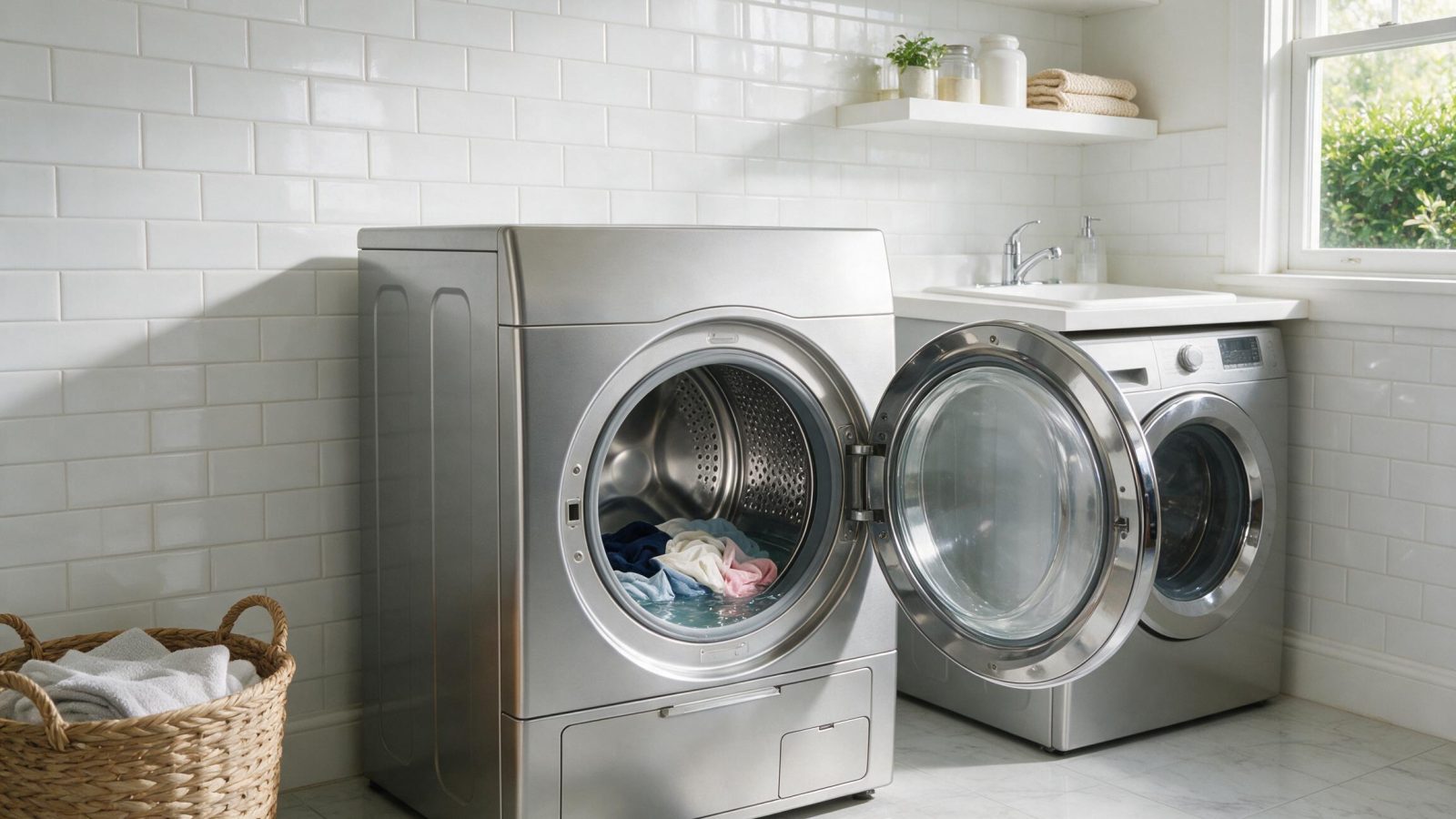
A GE washer that will not drain may have a kinked hose, installation problem, clogged front-load pump filter, blocked pump, failed drain motor, or control issue. Top-load and front-load designs require slightly different checks.
Opening a washer and finding soaking clothes in standing water immediately suggests a drain problem, but first determine whether the machine actually reached the drain portion of the cycle. Pauses, door/lid faults, and interrupted cycles can sometimes look like a pump failure.
GE’s support guidance starts with the drain hose and household drain, and on many front-load models also includes a user-accessible pump filter.
Some GE washers pause between cycle stages. If the machine stopped only briefly, wait and observe the display before canceling the cycle.
If a fault code is present, record it before resetting the machine.
GE recommends checking for kinks and clogs on both top- and front-load washers.
Look behind the machine for:
Correct routing is important because a badly positioned hose can cause either poor drainage or siphoning.
A washer pump is designed to lift water only within a specified range.
GE states that many full-size washers can pump to a maximum height of about 8 feet, while compact or portable models may have lower limits. Minimum and insertion dimensions also vary by washer type.
Use the model’s Installation Instructions rather than copying dimensions from another machine.
Many GE front-load washers have an accessible pump filter behind a small lower-front service door.
Coins, lint, hair, buttons, and other debris can restrict flow.
GE’s procedure for applicable models involves preparing towels and a shallow pan because water will escape when the filter is loosened. Open the filter slowly, clean debris, and reinstall it securely.
Not every model provides owner access. Do not remove a full front panel just because another GE model has a filter door.
A washer cannot drain into a clogged household pipe.
If water backs up around the standpipe while the pump runs, the appliance may be functioning correctly and the home drain needs plumbing service.
Do not seal the washer hose airtight into the standpipe; the installation requires appropriate air space.
When the washer should drain:
Pump hums, water barely moves: blockage or jam is likely. Pump makes grinding sound: foreign object or damaged impeller. No pump sound: pump motor, wiring, control, door/lid input, or cycle logic. Pump runs and standpipe overflows: household drain restriction.
This sound test is useful before disassembly.
The washer may refuse to advance or spin if it cannot confirm a safe lid/door condition.
A lock fault can leave water in the tub even though the drain pump itself is good.
Check for a lock-related message and make sure clothing is not trapped in the door or lid area.
Once hose and filter restrictions are eliminated, a failed pump becomes more likely.
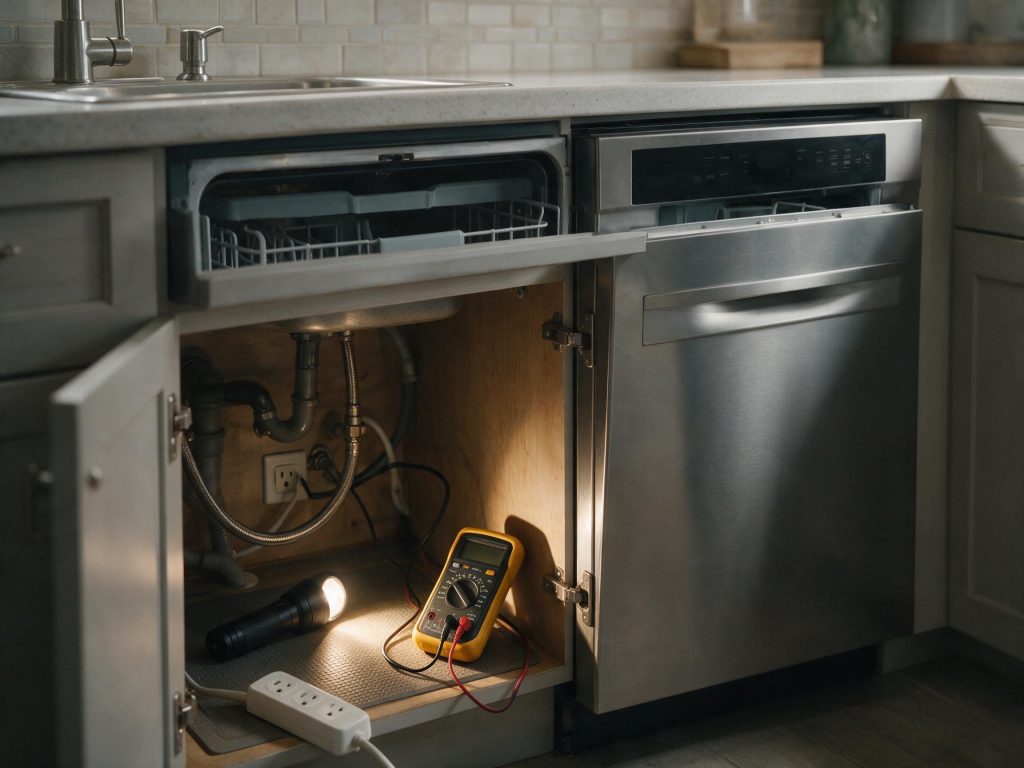
A pump can fail electrically or mechanically. Proper diagnosis may include checking winding resistance, operating voltage, impeller condition, and whether the control is commanding drain.
Disconnect power before accessing the pump.
If the pump and drain path are good but the pump never receives power, inspect wiring and control output.
Do not jump power directly to a pump unless you are using an authorized diagnostic procedure and understand electrical safety.
That is usually a siphoning/installation problem rather than a weak drain pump.
GE notes that on top-load installations, a drain hose inserted too far into the standpipe or a drain pipe that is too low can create siphoning. The exact hose depth and standpipe dimensions should follow the installation guide.
If the machine is full of water and will not drain:
A tub full of water is extremely heavy.
Request service if the hose and household drain are clear, the pump filter is clean where applicable, and the machine still cannot drain or will not energize the pump.
Provide the model number, whether it is top- or front-load, whether the pump makes noise, and whether the standpipe backs up. Those details quickly separate appliance and plumbing problems.
The fastest sequence is hose and household drain → user-accessible filter → pump operation → electrical command. Starting with the external drain path avoids unnecessary pump replacement. On a front loader with an accessible filter, debris may be removable without opening the full cabinet. On many top-load designs, the pump is not an owner-maintenance item and service access is different.
If the pump runs loudly but very little water leaves, restriction or a damaged impeller is likely. If the pump is silent, a technician can check whether the control supplies voltage during drain. Correct voltage with no pump response points toward the pump; no voltage points toward the control, wiring, or an input preventing drain.
Also remember that a washer that cannot drain may refuse to spin at full speed, so a “not spinning” complaint can originate with the drain system.
Coins, small socks, hair pins, and other objects can move into the drain path. Even if the washer eventually empties, a pump that suddenly becomes noisy may be striking debris. Continued operation can damage the impeller.
If a front-load pump filter is owner-accessible, inspect it according to the manual. If the model has no owner access, do not force panels off while the tub is full. A controlled service drain and pump inspection is safer.
Common causes include a kinked/clogged drain hose, improper drain installation, clogged front-load pump filter, blocked or failed pump, door/lid lock issue, or control fault.
No. Many front-load models have owner access, while other designs do not. Check the owner’s manual.
GE states that many full-size models can pump up to about eight feet, but model-specific installation limits take priority.
The household drain may be restricted or undersized even if the washer pump is functioning normally.
Yes. If the control does not confirm the required lid/door condition, the cycle may stop before normal drain/spin operation.
This article covers Ge Washer Not Draining: with practical checks you can run before booking a technician.
Need help now? Visit our services page or contact us.
Official manuals and support notes are available on GE owner support.
Remember: Ge Washer Not Draining: is easier to resolve when you capture the model number and when Ge Washer Not Draining: first appeared.
Write down the full model number before ordering parts. Board and sensor revisions can change which part number is correct.
A single power reset can clear a temporary fault, but repeated returns of the same code usually mean a physical cause remains.
Keep vents and filters clear between visits. Restricted airflow often mimics electrical or sensor failures.
If water, burning smells, or sparking are present, stop using the appliance and arrange a professional inspection.
If a GE dishwasher has no lights, tones, display, or response at all, start with the household electrical supply. A tripped breaker, switched outlet,…
The location of a dishwasher leak matters. Water from the door points toward different causes than water under the cabinet or at the sink…
Poor wash results are often a system problem rather than one failed part. The dishwasher needs hot water, correct detergent chemistry, adequate fill, unrestricted…
Request a repair on our homepage booking form, or call us and we’ll help right away.