
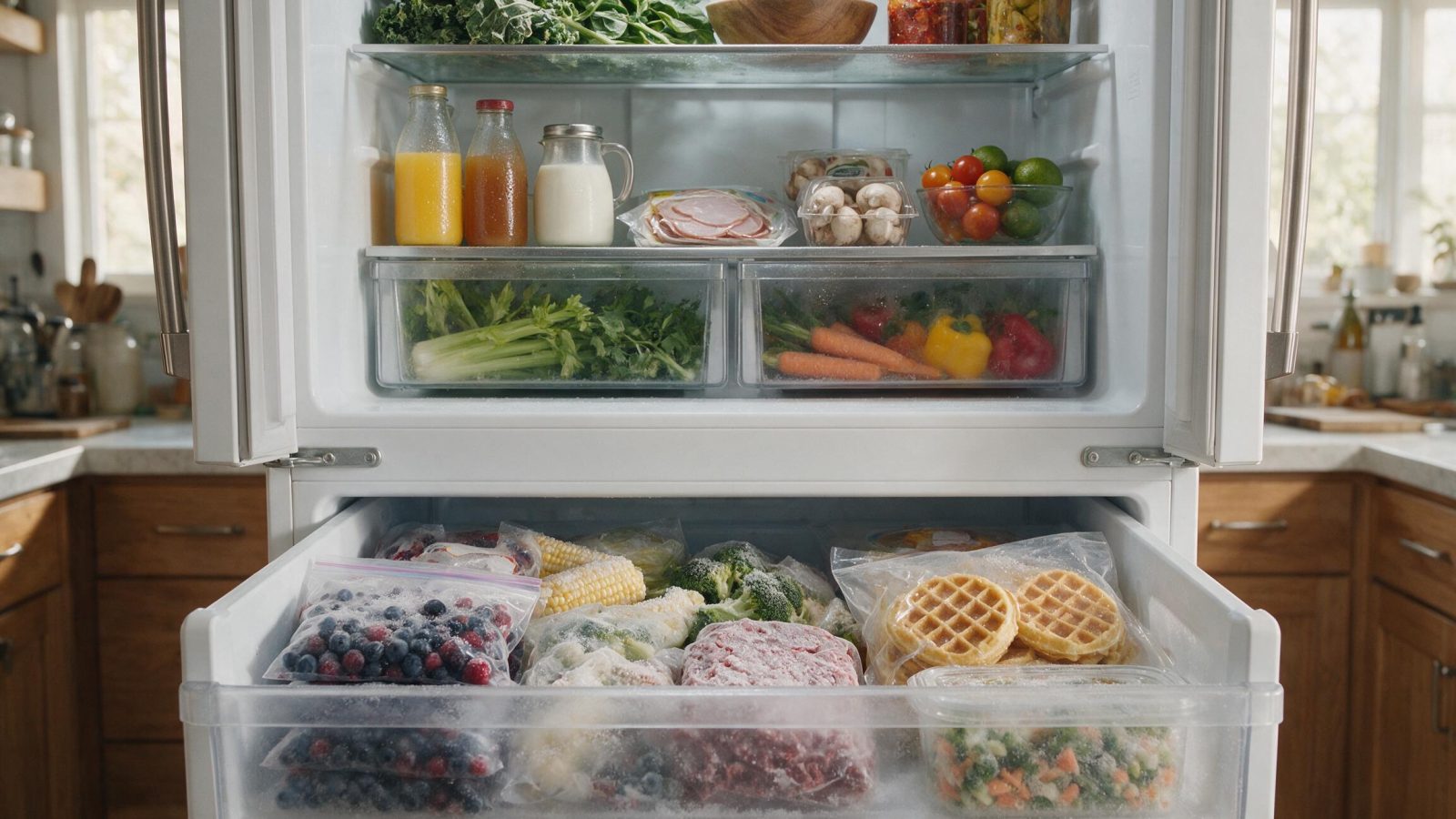
When the freezer is cold but the refrigerator section is warm, the sealed refrigeration system may still be producing cold air. The problem is often how that air is being moved, controlled, or distributed.
A warm fresh-food compartment with a cold freezer is one of the most useful refrigerator symptoms because it narrows the diagnosis. In many GE refrigerator designs, the evaporator removes heat in the freezer area and a fan distributes cold air to the rest of the cabinet. If the freezer is still doing its job, the first suspects are usually airflow and temperature-control components rather than the compressor itself.
That does not mean every case has the same cause. A vent blocked by groceries, an iced-over evaporator, a weak fan motor, a stuck damper, or a bad thermistor can all create similar temperatures.
Do not rely only on how the compartments feel. Put an appliance thermometer in each section and allow enough time for a representative reading.
A freezer near its normal target while the refrigerator is well above the safe food-storage range confirms that cooling is being produced but not managed correctly in the fresh-food section.
If both sections are too warm, use a broader “refrigerator not cooling” diagnosis instead.
One of the easiest problems to create is an airflow blockage.
Large containers, bags, and food boxes can block:
Rearrange the refrigerator so air can circulate around the shelves and back wall. Avoid forcing food tightly against vents just because the refrigerator still has physical storage space.
If the refrigerator cools normally after several hours, the problem may have been distribution rather than a failed component.
Look at the inside rear panel of the freezer. A thick white frost layer can hide a much larger ice buildup around the evaporator coil.
That ice acts like an airflow barrier. The freezer can remain cold near the evaporator while the fan struggles to move enough air to the refrigerator.
A defrost problem may involve the defrost heater, sensor, thermostat, wiring, or electronic control depending on the model.
Manually thawing the appliance can temporarily restore airflow, but if the defrost system has failed, the ice will normally return. A temporary thaw should not be mistaken for a complete repair.
The evaporator fan is central to this symptom.
When cooling is active, you should normally hear airflow in the freezer area on models that use a fan. Some refrigerators stop the fan when a door is open, so a door switch may need to be held closed for testing. Procedures vary by model.
Possible fan-related symptoms include:
If ice is hitting the blade, do not continue operating the fan against the obstruction. The root problem may be frost accumulation rather than the motor itself.
Many refrigerator designs regulate fresh-food temperature with a damper that controls how much freezer air enters the refrigerator section.
If the damper sticks closed, the freezer may look completely normal while the refrigerator warms.
If it sticks too far open, the opposite symptom can occur: food freezes in the fresh-food section.
A damper can fail mechanically, electrically, or because ice or debris prevents movement. Diagnosis may require observing commanded damper movement or testing its motor and control signals.
A fresh-food door that leaks warm room air can overwhelm the airflow entering that compartment even when the freezer is operating normally.
Check for:
Clean the gasket and mating surface. If the door still leaves a visible gap, correct the alignment or replace damaged sealing components.
Electronic GE refrigerators use temperature feedback to determine when and how strongly to cool.
A thermistor that reports an incorrect temperature can cause the control to reduce airflow or cooling before the refrigerator section is actually cold enough.
Because sensor resistance changes with temperature, proper testing normally requires the model-specific service information and an accurate meter. Replacing a sensor simply because a refrigerator is warm is not a reliable diagnosis.
Some configurations use more than one fan. A refrigerator may have a dedicated fresh-food fan or additional airflow hardware rather than relying solely on one freezer fan.
This is why the model number matters. Two GE French-door refrigerators that look similar from the outside may use different airflow layouts and diagnostic procedures.
Before ordering a fan, verify the exact model and parts diagram.
“Freezer cold, refrigerator warm” usually suggests airflow, but not always.
A marginal sealed system can sometimes produce enough refrigeration to keep part of the freezer cold while overall capacity is insufficient. A partial frost pattern, long compressor run times, and rising temperatures in both sections over time can point away from a simple damper problem.
If airflow components check out but cooling capacity is weak, sealed-system testing may be necessary.
Freezer cold + no airflow at refrigerator vent: check fan, frost, damper, or blocked duct. Freezer cold + heavy rear-wall frost: investigate defrost system. Freezer cold + fan scraping: inspect for ice around fan and evaporator. Freezer cold + refrigerator door sweating: inspect gasket and alignment. Both sections slowly warming: broaden diagnosis to condenser, compressor, control, or sealed system.
Request service when the problem involves interior-panel removal, electrical testing, a fan that is not operating, recurring frost, a damper that will not move, or temperatures that remain unsafe after obvious airflow issues are corrected.
A good diagnosis should identify why cold air is not reaching the fresh-food section rather than immediately replacing the main control board.
If your GE freezer is cold but the refrigerator is warm, provide the model number, measured temperatures, whether you hear the evaporator fan, and whether there is visible frost on the freezer wall. Those four details can make troubleshooting much faster.
The freezer may still be creating cold air, but that air is not reaching or being properly regulated in the refrigerator. Blocked vents, frost, fan failure, or a damper issue are common categories.
Yes. Food packed against vents or return-air passages can interfere with circulation even while the freezer remains cold.
A complete thaw can remove the ice temporarily, but it does not correct a failed defrost component. If frost returns, further diagnosis is needed.
It proves that some refrigeration is occurring, but it does not completely rule out a weak or partial sealed-system problem.
Location varies by model. It is generally part of the air path between compartments, but you should use the model-specific parts diagram or service information before disassembly.
Need help now? Visit our services page or contact us.
Official manuals and support notes are available on GE owner support.
Remember: Ge Refrigerator Not Cooling is easier to resolve when you capture the model number and when Ge Refrigerator Not Cooling first appeared.
Write down the full model number before ordering parts. Board and sensor revisions can change which part number is correct.
A single power reset can clear a temporary fault, but repeated returns of the same code usually mean a physical cause remains.
Keep vents and filters clear between visits. Restricted airflow often mimics electrical or sensor failures.
If water, burning smells, or sparking are present, stop using the appliance and arrange a professional inspection.
Wet dishes do not always indicate a failed heater. Rinse aid, loading, cycle selection, incoming temperature, dish material, and the dishwasher’s specific drying technology…
Beeps and flashing LEDs are not one universal GE error. They can signal a door event, reset, button tone, interrupted cycle, power disturbance, or…
A GE washer that will not drain may have a kinked hose, installation problem, clogged front-load pump filter, blocked pump, failed drain motor, or…
Request a repair on our homepage booking form, or call us and we’ll help right away.