
Slow drying is often an airflow problem before it is a heating-element problem. A GE dryer needs a clean lint path, correctly sized load, strong exhaust flow, proper heat, and clothes that leave the washer properly spun out.
If a dryer takes two or three cycles to finish a normal load, it is using extra time and energy—and it may be signaling restricted airflow. A clogged exhaust path is especially important because it can cause overheating as well as poor performance.
GE’s support guidance for long dry times emphasizes lint-filter cleaning, household power, load size, washer performance, and proper exhaust conditions.
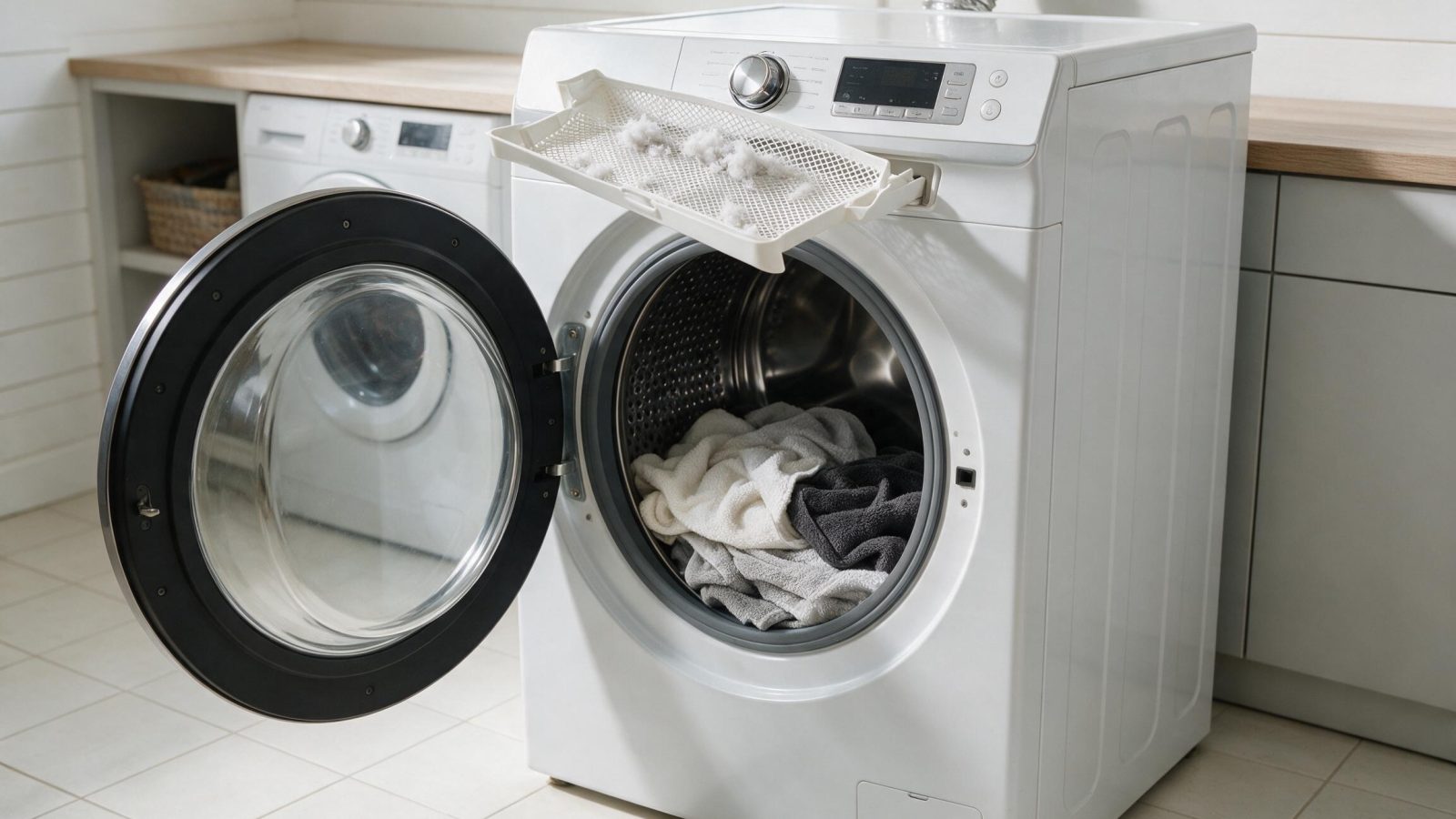
Remove lint before each cycle. Even a filter that looks clean can develop a nearly invisible coating from fabric-softener residue.
GE notes that lint screens can be washed with warm soapy water when residue reduces airflow. Allow the filter to dry completely before reinstalling it.
Never run the dryer without the filter in place.
With the dryer running on a heated cycle, check the outside exhaust hood.
You should feel a strong, steady stream of warm moist air. Weak airflow suggests restriction somewhere between the dryer and exterior outlet.
Inspect for:
The complete vent system should comply with the dryer’s Installation Instructions and local code.
Clothes need room to tumble so warm air can contact wet surfaces.
GE advises drying approximately one washer load at a time rather than combining loads into one oversized dryer load.
An overloaded drum can leave a dense wet center that takes much longer to dry.
Sensor-dry cycles work best when clothing repeatedly contacts moisture sensors and tumbles through the air stream.
GE notes that very small loads may perform better with a timed cycle on some models.
If you are drying one or two pieces, add similar items when appropriate or use the cycle recommended in the owner’s manual.
The dryer should not have to compensate for a washer problem.
If clothes can be wrung out by hand when they leave the washer, troubleshoot washer spin/drain performance first.
GE specifically points out that poor washer water extraction can make dryer times seem abnormally long.
Low-temperature and delicate cycles intentionally dry more slowly.
Check that:
GE’s Extended Tumble feature on applicable models adds no-heat tumbling after clothing is dry, so the drum may continue turning even though active drying has ended.
An electric dryer can sometimes tumble with a partial electrical supply but heat weakly or not at all.
If dry times suddenly become much longer and the air never gets properly hot, check the double-pole breaker and have supply voltage verified if necessary.
GE notes that an electric dryer connected to an incorrect 120-volt supply instead of its required 240-volt circuit can take dramatically longer to dry.
A dryer that starts hot and then stays cool for the rest of the cycle may have a heat-source or temperature-control problem.
Possible causes include:
Observe temperature behavior over several minutes rather than only touching the drum immediately after Start.
On sensor cycles, conductive strips or electronic moisture sensing help decide when the load is dry.
Residue on sensors can affect readings. A control or sensor fault can also end a cycle too early or keep it running unnecessarily.
Follow the owner’s manual for cleaning accessible sensor surfaces; avoid abrasive materials that can damage finishes.
Long exhaust runs, many elbows, crushed ducting behind the dryer, or an undersized vent can reduce airflow even when the lint filter is clean.
If slow drying has existed since installation, compare the actual duct route with the model’s installation limits.
Rigid or semi-rigid metal ducting is generally preferred where allowed; follow local code and manufacturer instructions.
Run a normal load and check:
1. Clothes leave the washer damp, not dripping. 2. Lint filter is clean. 3. Dryer heats on a heated cycle. 4. Drum has room for clothes to tumble. 5. Exterior vent has strong airflow. 6. Exhaust flap opens fully. 7. Electric dryer has correct full supply voltage. 8. Cycle is not an intentionally low-heat option.
If one of these fails, fix it before replacing sensors or controls.
Request service if the vent is clear and installation is correct but the dryer cannot maintain heat, sensor cycles behave incorrectly, or electrical/gas components need diagnosis.
Tell the technician whether the dryer is gas or electric, how long a typical load now takes, whether the outside vent blows strongly, and whether the clothes leave the washer unusually wet.
The lint filter protects the dryer but does not catch every fiber. Over years of use, lint can accumulate in the transition duct, elbows, wall cavity, or exterior hood. Flexible duct can also collapse behind the dryer after the appliance is pushed back into place.
If drying time gradually increased rather than changing overnight, the full exhaust path deserves inspection. A professional vent cleaning may be appropriate when the duct runs a long distance through walls or a roof. If airflow is still poor after the building vent is confirmed clear, inspect the dryer blower and internal lint path.
Correct airflow is not only a performance issue. A dryer that repeatedly overheats because it cannot exhaust properly can damage thermal components and increase fire risk.
If sensor cycles end too early while clothes are still damp, run an appropriate timed-dry test. Good drying on Timed Dry but poor results on sensor cycles shifts attention toward load size, sensor contact, sensor cleanliness, or control logic. Poor drying on both modes points more strongly toward airflow, heat, power, or washer extraction.
This comparison is especially useful for very small loads, which may not contact moisture sensors consistently.
Common causes include restricted exhaust, dirty lint filter, oversized load, wet clothes from poor washer spin, low heat, incorrect power, or sensor/control issues.
Yes. Fabric-softener residue can coat the mesh. GE recommends washing the filter when residue is present.
Heat without adequate airflow cannot remove moisture efficiently. Check the exhaust path and load size.
Yes. If the washer does not extract enough water during spin, drying time rises substantially.
It can be. Excessive length and bends increase airflow resistance. Follow the model-specific installation limits.
This article covers Ge Dryer Takes Too with practical checks you can run before booking a technician.
Need help now? Visit our services page or contact us.
Official manuals and support notes are available on GE owner support.
Remember: Ge Dryer Takes Too is easier to resolve when you capture the model number and when Ge Dryer Takes Too first appeared.
Write down the full model number before ordering parts. Board and sensor revisions can change which part number is correct.
A single power reset can clear a temporary fault, but repeated returns of the same code usually mean a physical cause remains.
Keep vents and filters clear between visits. Restricted airflow often mimics electrical or sensor failures.
If water, burning smells, or sparking are present, stop using the appliance and arrange a professional inspection.
Some vibration is normal during spin, but a GE washer that walks across the floor, bangs the cabinet, or repeatedly stops to rebalance needs…
If a GE top-load washer fills normally and then sits still, the water-supply system is probably doing its job. The next step is to…
A washer that will not start can be completely dead or powered but unable to begin a cycle. Separate those two symptoms first, then…
Request a repair on our homepage booking form, or call us and we’ll help right away.