

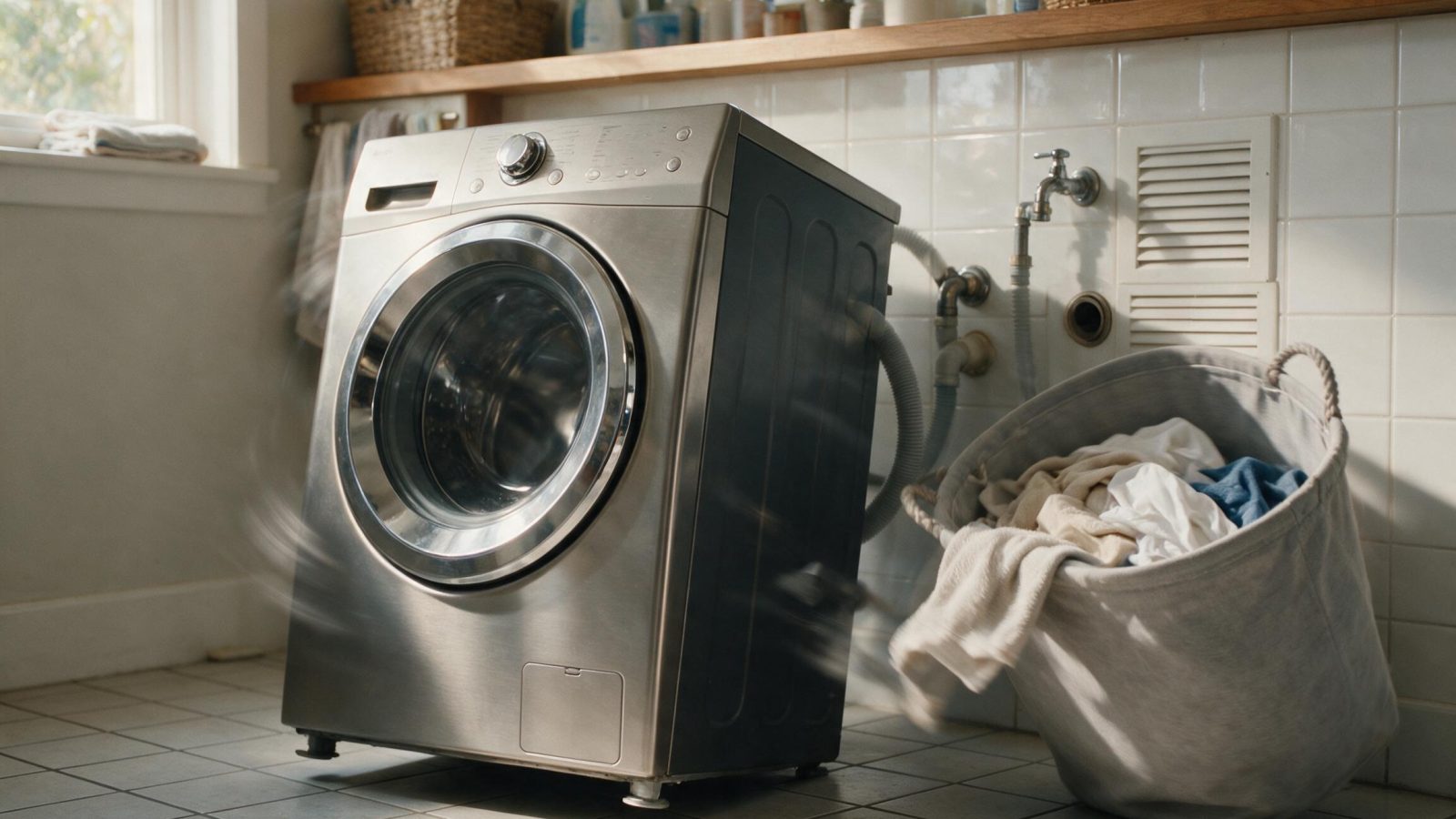
Some vibration is normal during spin, but a GE washer that walks across the floor, bangs the cabinet, or repeatedly stops to rebalance needs attention. Installation and load problems should be ruled out before suspension parts are replaced.
High-speed spin creates large forces. A properly installed washer controls those forces with leveling, suspension, and balance logic. When something is wrong, the machine may shake, knock, move across the floor, or stop repeatedly to redistribute the load.
GE support highlights unbalanced loads, leveling, shipping hardware, and installation as key first checks.
An unbalanced load is the most common non-repair cause.
Bulky items such as:
can collect on one side of the tub.
Pause the washer and spread items evenly. If necessary, add or remove pieces to create a more balanced load.
A useful isolation test is to run the washer empty.
If vibration disappears with no load, the problem is more likely related to loading or balance. If the empty washer still moves violently, installation or mechanical suspension becomes more likely.
GE makes a similar recommendation for certain washer/combination models when diagnosing excessive vibration.
All feet should contact the floor firmly.
A washer can appear visually level but rock diagonally when pushed at the corners. That movement becomes amplified during spin.
Adjust the leveling legs according to the installation instructions and tighten locking nuts where used.
GE notes that extending legs farther than necessary can make a washer less stable.
A flexible wood floor can transmit and amplify washer vibration.
The machine needs a solid surface capable of supporting its loaded weight. If the washer sits on a weak platform or springy floor, even correct suspension may feel excessive.
Do not try to solve a structural floor problem by placing random soft foam under the washer; that can make the machine less stable.
Front-load washers use shipping bolts or braces to immobilize the suspended drum during transportation.
GE warns that leaving shipping hardware installed can cause severe vibration. Consult the Installation Instructions for the exact bolt locations and removal procedure.
If a new front loader has shaken violently since its very first cycle, shipping bolts should be checked immediately.
Certain GE top-load washer designs use a shipping rod. GE documents that leaving this rod installed can make the washer noisy and cause vibration.
Again, this is model-specific. Do not search blindly for a rod on a machine whose installation instructions do not show one.
The suspension allows the tub to move while controlling that movement.
Worn suspension can cause:
Top loaders commonly use suspension rods or springs; front loaders often use dampers/shock absorbers and springs.
A damaged bearing, loose basket, or worn hub can create vibration that loading changes do not solve.
Clues include:
Bearing repairs can be extensive depending on the design.
Moving a washer can change leg adjustment, strain suspension, or damage internal components if shipping hardware was not reinstalled when required.
If vibration started immediately after relocation, recheck installation from the beginning.
Modern washers monitor speed and imbalance. If the sensing system receives bad feedback, it may attempt unstable spins or repeatedly abort.
This is less common than an actual load or suspension issue, so mechanical and installation checks should come first.
Only one bulky load causes banging: redistribute/load issue. Every load shakes, empty test is smooth: loading habits or marginal suspension. Empty washer also walks: leveling, floor, shipping hardware, suspension. New washer violent from day one: shipping bolts/rod and installation. Roaring plus wobble: bearing/basket/hub issue.
Request repair if the washer is level on a solid floor and still shakes during an empty spin, if suspension is visibly weak, or if you hear bearing/drive noises.
Mention whether the washer is top- or front-load, whether it was recently installed or moved, and whether the shaking occurs with an empty drum.
With the washer empty and powered off, observe the basket position. Excessive sag, a basket that sits visibly off-center, or unusual looseness can indicate suspension or tub-support wear. On a front loader, gently rotating the drum by hand can reveal rough bearing noise or excessive play. On a top loader, pressing the basket down and releasing it can show whether the suspension controls motion or allows repeated bouncing.
These checks do not replace disassembly, but they help distinguish a flexible-floor complaint from a worn mechanical support system. If the washer began walking only after years of stable operation on the same floor, mechanical wear becomes more plausible than installation.
Avoid operating a washer that repeatedly strikes its cabinet. Continued impact can damage hoses, wiring, tub components, and the cabinet itself.
Pads can help in certain installations, but they should not hide a washer that is out of level, still has shipping hardware installed, or has failed suspension. Soft materials can sometimes increase movement by allowing the feet to flex.
Correct the installation first: solid floor, all feet firmly planted, minimal leg extension, correct shipping-hardware removal, and balanced loads. Add any manufacturer-approved isolation solution only after those basics are right.
A newly installed washer can settle slightly into flooring or anti-slip feet after its first few loads. Recheck that all four feet still make firm contact and that locking nuts remain secure. If the machine has slowly migrated closer to a wall, hoses or the power cord can also begin transmitting vibration.
Leave the clearances required by the installation instructions and make sure nothing behind the washer is being struck during spin.
If the washer has moved far enough to pull on the inlet hoses, drain hose, or power cord, stop using it until those connections are inspected. A vibration problem should not be allowed to turn into a water leak or electrical problem.
An unbalanced load, poor leveling, flexible floor, shipping hardware, worn suspension, or tub/bearing problem can cause violent spin vibration.
Yes. Front-load shipping bolts are designed to lock the drum for transport and must be removed for normal operation.
Heavy absorbent items can bunch together and create an uneven load.
Yes. The washer should sit firmly without rocking.
That points away from load balance and toward installation, suspension, bearing, or drive issues.
This article covers Ge Washer Shaking, Banging, with practical checks you can run before booking a technician.
Need help now? Visit our services page or contact us.
Official manuals and support notes are available on GE owner support.
Remember: Ge Washer Shaking, Banging, is easier to resolve when you capture the model number and when Ge Washer Shaking, Banging, first appeared.
Write down the full model number before ordering parts. Board and sensor revisions can change which part number is correct.
A single power reset can clear a temporary fault, but repeated returns of the same code usually mean a physical cause remains.
Keep vents and filters clear between visits. Restricted airflow often mimics electrical or sensor failures.
If water, burning smells, or sparking are present, stop using the appliance and arrange a professional inspection.
A GE washer may refuse to spin because the load is unbalanced, water has not drained, the lid or door is not locking, or…
If a GE top-load washer fills normally and then sits still, the water-supply system is probably doing its job. The next step is to…
A washer that will not start can be completely dead or powered but unable to begin a cycle. Separate those two symptoms first, then…
Request a repair on our homepage booking form, or call us and we’ll help right away.