
A GE washer may refuse to spin because the load is unbalanced, water has not drained, the lid or door is not locking, or the drive system cannot reach speed. Start with conditions the control checks before blaming the motor.
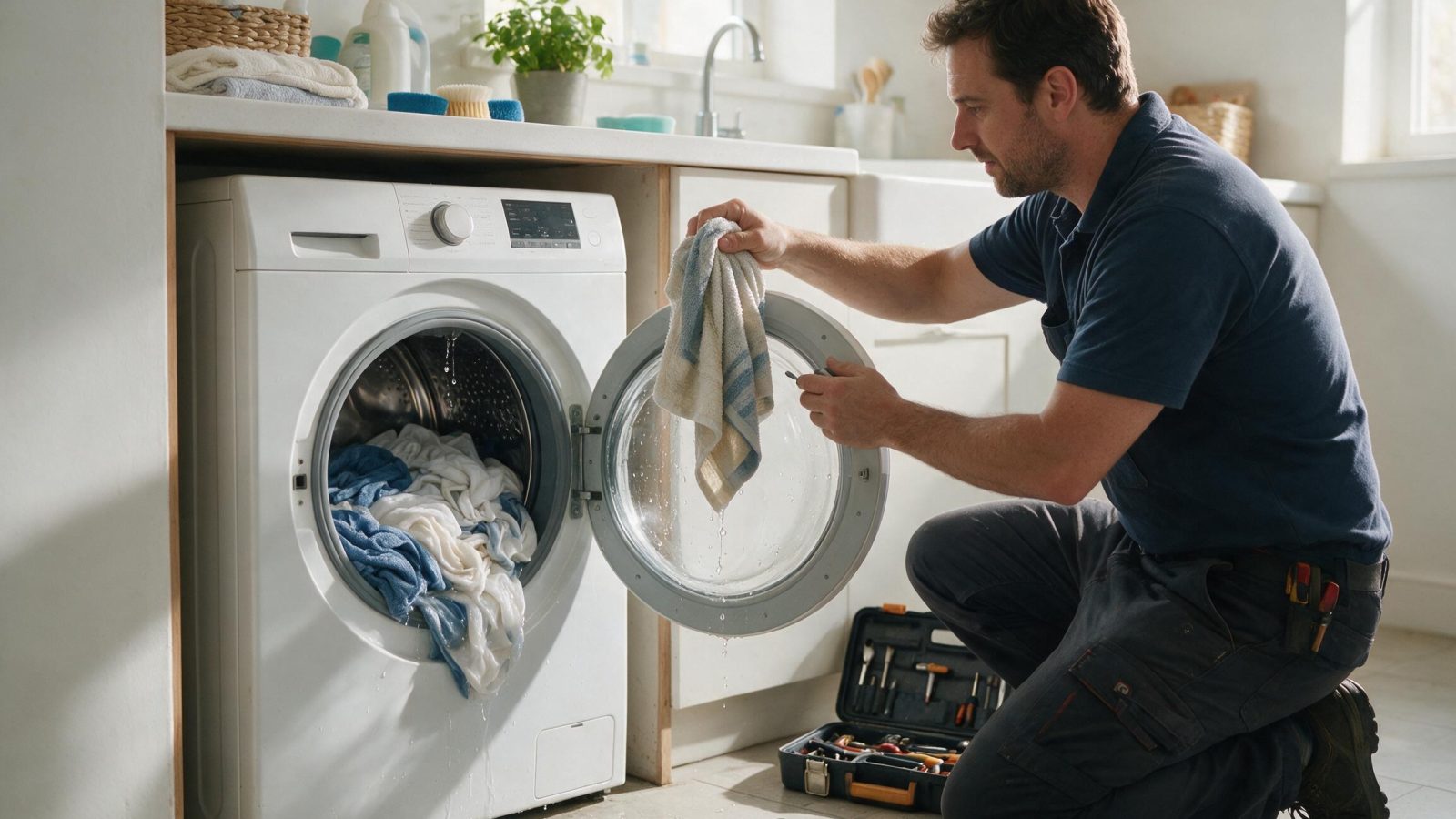
A washer that finishes with soaked clothes can have a true spin failure, a drainage problem, or simply an incomplete final spin. The distinction matters because replacing a motor will not help a machine that refuses to spin because it is still full of water.
GE support specifically recommends checking power and load conditions for top-load no-spin complaints, and modern washers also rely heavily on lid/door lock feedback.
Look for standing water in the tub.
If water remains, troubleshoot drainage first. Most washers will not enter full-speed spin while the control believes the tub is still full.
Check the drain hose, pump filter on applicable front-load models, household drain, and pump operation.
One heavy blanket, bath mat, or a few saturated towels can collect on one side of the basket. The control may slow, stop, or repeatedly attempt to rebalance rather than accelerate to full spin.
Pause the washer and redistribute the load evenly.
If the machine spins normally with an empty basket or a balanced test load, the original problem may have been load distribution rather than a failed component.
Delicate, hand-wash, or certain specialty cycles may use a reduced spin speed. A “no spin” or low-spin option can also leave clothing wetter than expected.
Review the selected cycle before diagnosing hardware.
GE notes that a loss of electrical power can prevent spin operation on top-load washers.
If the display went blank or the cycle stopped unexpectedly, check the breaker and outlet. An intermittent outlet or loose plug can create a machine that appears to “randomly” skip spin.
Many modern top-load washers require the lid to lock before high-speed spin.
If the lid does not lock, inspect for:
Do not bypass the lid lock. It is a safety device intended to prevent access to a high-speed basket.
Front-load washers likewise need a confirmed locked door before spin.
A worn door latch may lock intermittently during wash but fail when vibration increases. If the door-lock symbol changes unexpectedly or the cycle stops before spin, lock diagnosis is appropriate.
Depending on the washer design, the motor transfers torque through a belt or other drive components.
A stretched, broken, or displaced belt can cause:
Disconnect power before inspecting drive parts.
Modern washer controls monitor motor rotation. A motor can fail electrically, mechanically, or because its speed feedback is incorrect.
Symptoms may include:
Testing may require service mode, resistance measurements, or inverter/control diagnostics depending on model.
Weak suspension rods, dampers, or worn tub support components allow the basket to move excessively.
The washer may then reduce spin speed because it cannot balance the load.
This is especially likely if the machine also bangs, walks, or repeatedly redistributes even with ordinary loads.
If lock, drain, balance, drive components, and motor test correctly but the control never commands spin, inspect wiring and control logic.
A control board should not be replaced solely because the washer will not spin. Verify the inputs that the control requires before it permits high-speed operation.
Water still in tub: drain problem first. Spins empty but not with towels: load balance or suspension. Lid clicks repeatedly: lid lock/strike/alignment. Motor runs but basket does not: drive system. Basket starts then stops with code: speed sensing, balance, motor, or control. Very loud shaking before spin stops: leveling or suspension.
1. Washer has stable power. 2. Correct cycle and spin speed selected. 3. Load is balanced. 4. Tub drains fully. 5. Lid or door locks normally. 6. Washer is level. 7. No obvious belt debris or burning odor. 8. Error code is recorded before reset.
Request service if the washer drains and locks correctly but cannot accelerate, if the drive system slips, the motor repeatedly stalls, or the suspension/control system needs testing.
Tell the technician whether water remains in the tub, whether the basket turns by hand with power disconnected, whether the lock engages, and whether the washer can spin an empty load.
A technician can check whether the washer reaches the point in the cycle where spin should begin and whether the lid/door lock input is confirmed. If the control sends the expected motor command but the basket cannot accelerate, the focus moves to the motor, belt/drive, speed feedback, and mechanical resistance. If the command never appears, the lock, water-level/drain status, wiring, or control logic may be preventing spin.
An empty-spin test is especially valuable. A machine that reaches full speed empty but fails with ordinary loads may have weak suspension, a slipping drive system, or a motor that cannot develop enough torque under load. A washer that cannot spin even empty is more likely to have a direct drive/control fault.
Test more than one type of load before concluding that the machine cannot spin. A washer that handles a few shirts but fails with towels may have marginal suspension, a slipping drive, or a balance problem that does not appear with lighter loads. Conversely, a washer that cannot spin even an empty basket points toward a more direct lock, motor, drive, or control fault.
Record whether the basket makes several short acceleration attempts before giving up. That behavior often means the control is actively trying to balance or verify speed rather than simply failing to start.
Possible causes include load imbalance, lid/door lock failure, belt or drive problem, motor/speed sensor fault, suspension issue, or control problem.
The final spin may have been reduced or skipped because of imbalance, cycle selection, drainage, or a mechanical/electrical fault.
Yes. Many models will not enter high-speed spin unless the lid lock is confirmed.
An unbalanced load, weak suspension, slipping drive, or motor unable to handle load can cause this pattern.
No. Test the lock circuit safely; do not defeat a safety interlock.
This article covers Ge Washer Not Spinning: with practical checks you can run before booking a technician.
Need help now? Visit our services page or contact us.
Official manuals and support notes are available on GE owner support.
Remember: Ge Washer Not Spinning: is easier to resolve when you capture the model number and when Ge Washer Not Spinning: first appeared.
Write down the full model number before ordering parts. Board and sensor revisions can change which part number is correct.
A single power reset can clear a temporary fault, but repeated returns of the same code usually mean a physical cause remains.
Keep vents and filters clear between visits. Restricted airflow often mimics electrical or sensor failures.
If water, burning smells, or sparking are present, stop using the appliance and arrange a professional inspection.
If a GE dishwasher has no lights, tones, display, or response at all, start with the household electrical supply. A tripped breaker, switched outlet,…
The location of a dishwasher leak matters. Water from the door points toward different causes than water under the cabinet or at the sink…
Poor wash results are often a system problem rather than one failed part. The dishwasher needs hot water, correct detergent chemistry, adequate fill, unrestricted…
Request a repair on our homepage booking form, or call us and we’ll help right away.