
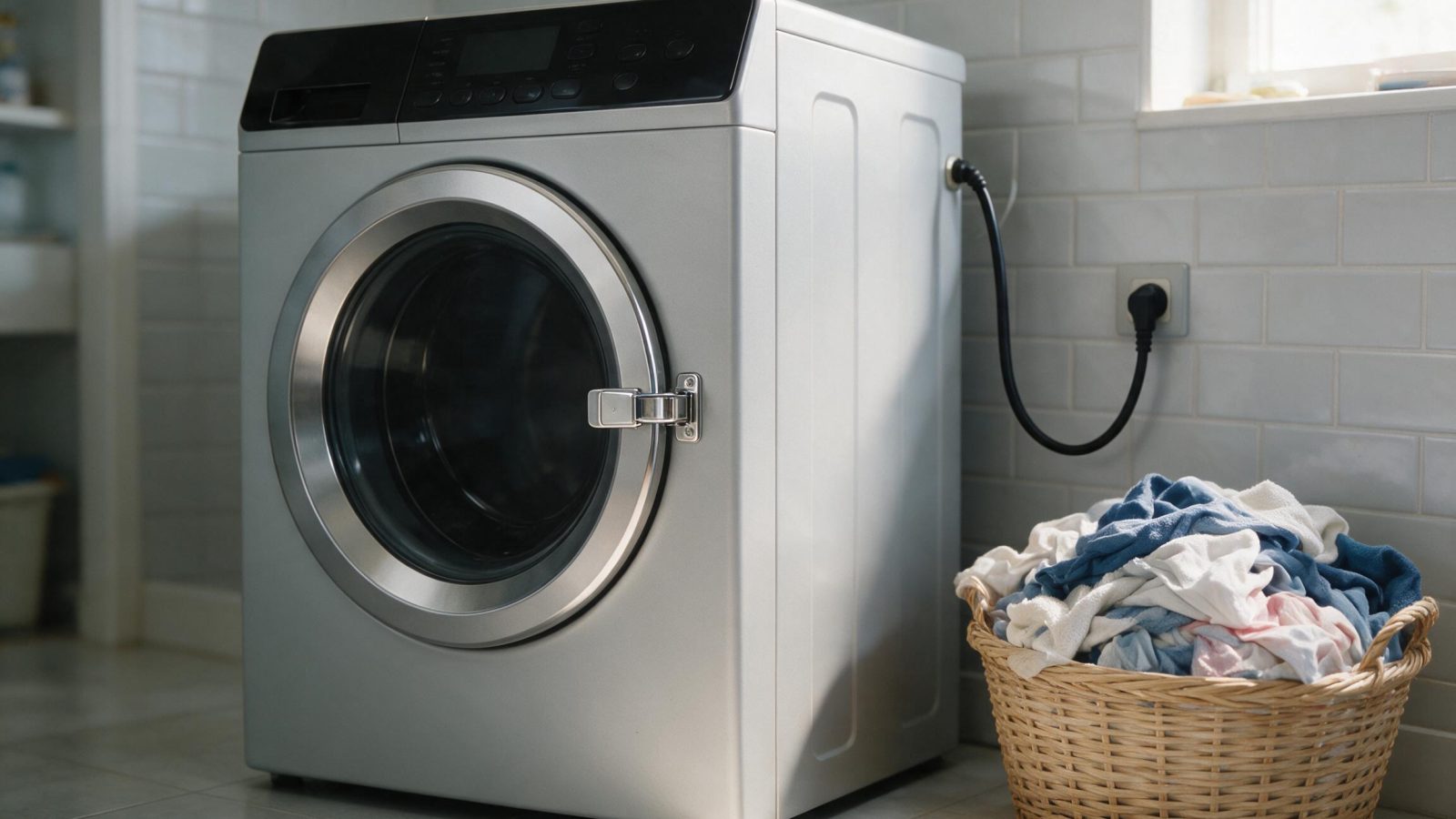
A GE dryer that will not start may have lost household power, may not recognize the closed door, or may have an internal motor, thermal, belt, or control fault. Determine whether the panel is dead or the drum simply refuses to turn.
A dryer that does nothing when Start is pressed can be caused by something as simple as a loose plug or as involved as a failed drive motor. The diagnostic path becomes much shorter if you first separate no electrical response from controls work but drum does not start.
GE’s dryer support checklist begins with the plug, door closure, cycle selection, Start control, door switch, and household breaker.
Dryers can vibrate, and plugs or cords can be disturbed during cleaning or moving.
Confirm the connection is secure. Do not use an extension cord or adapter not approved for the appliance.
If you see burn marks at the receptacle, stop using it and arrange electrical repair.
Electric dryers typically use a dedicated high-voltage circuit; gas dryers normally use a dedicated 120-volt outlet for controls and motor operation.
Reset a tripped breaker once. If it trips again, do not keep forcing it on.
A repeated trip may indicate a shorted component, damaged wiring, or supply problem.
The dryer will not normally run if the control does not recognize a closed door.
Look for clothing caught at the opening or a door that does not latch cleanly.
GE specifically advises inspecting the door switch if it appears scorched, damaged, or pushed inward.
A failed door switch can leave the dryer silent even with a working display.
Depending on design, the drum light may also provide a clue, but light behavior alone is not a conclusive electrical test.
Do not permanently bypass the switch. It is part of the safety system that stops drum movement with the door open.
Make sure a valid drying cycle is selected and the Start control is fully engaged.
On digital models, confirm control lock is off. On timer models, verify the timer is not sitting between cycle positions.
Some GE dryer models may also require model/personality configuration after certain control replacement or setup conditions; follow model-specific instructions if the display indicates such a state.
GE calls out burned, loose, or broken connections at the rear terminal block as a possible no-start or power concern.
Turn off the breaker before inspection.
If terminals are burned or insulation is damaged, the correct repair may include both the damaged cord and terminal components—not simply retightening a scorched connection.
Some dryer designs use a thermal fuse that can interrupt motor operation after an overtemperature event.
If a thermal safety has opened, find the cause. A restricted vent is a common contributor to dryer overheating.
Replacing the safety device without correcting airflow can lead to repeat failure and unsafe temperatures.
Certain dryers use a switch that prevents the motor from continuing if the drive belt breaks.
A broken belt can produce a dryer with powered controls but no drum movement.
Other clues include a drum that turns unusually freely by hand with power disconnected.
Not all models use the same belt-switch arrangement, so verify the design before ordering parts.
A motor can fail mechanically, electrically, or through an internal overload.
Possible symptoms include:
If the motor does not receive the start command, the control, relay, wiring, or start switch may be at fault.
No lights/no sound: supply, plug, breaker, cord, internal power circuit. Panel works but Start does nothing: door switch, control lock, Start switch, control. Hums but does not turn: motor, jammed drum/blower, belt/drive. Runs after cooling then stops again: motor overload or overheating. Breaker trips: electrical short or motor/heater/wiring fault—stop use.
Request service if the household supply is correct but the dryer still cannot start, the door switch or motor needs electrical testing, or there is evidence of heat-damaged wiring.
Provide the model number, fuel type, whether the display lights, whether the drum light works, and exactly what happens when Start is pressed.
Intermittent no-start complaints are often more revealing than a completely dead dryer. If the dryer starts after the door is opened and closed several times, the door switch or latch alignment becomes more suspicious. If it starts only after cooling for 20 to 30 minutes, the motor’s internal overload or an overheating condition may be involved. If moving the cord changes the symptom, stop using the appliance and inspect the electrical connection.
Record the conditions when it fails: hot or cold machine, heavy or light load, immediately after a previous cycle, and whether the control panel remains powered. Those details help a technician reproduce an intermittent problem that may otherwise disappear during a short service visit.
With power disconnected, rotate the drum by hand. Some resistance is normal, but it should not feel locked or grind heavily. A seized roller, blower, idler, or motor can prevent the motor from starting and may cause humming or overload shutdown.
If the drum is unusually easy to spin and you no longer feel normal belt resistance, a broken belt is possible. This simple mechanical check can guide service without energizing the dryer.
If the no-start condition was preceded by a burnt-plastic, electrical, or rubber smell, do not keep pressing Start. Disconnect power and inspect for heat-damaged cord/terminal connections, a seized motor, a stalled belt/idler, or another overheated component.
Odor history is an important clue because an electrical connection can fail under load and look normal again after cooling. Mention the smell when scheduling service.
A dryer that was running and then stopped has a different history from one that was dead from the beginning. Check whether the motor area was unusually hot, whether the breaker tripped, and whether the machine restarts only after cooling. Thermal overload, vent restriction, motor failure, or an electrical connection can create this pattern.
Possible causes include a power problem, open door switch, invalid/locked control setting, thermal safety, broken belt/belt switch, failed motor, wiring fault, or control issue.
Yes. The motor start circuit normally requires a confirmed closed door.
The motor may be stalled, the drum or blower may be jammed, or a drive component may be binding.
Severe airflow restriction can contribute to overheating and thermal safety failures.
No. A breaker that repeatedly trips should be treated as an active electrical fault.
Need help now? Visit our services page or contact us.
Official manuals and support notes are available on GE owner support.
Remember: Ge is easier to resolve when you capture the model number and when Ge first appeared.
Write down the full model number before ordering parts. Board and sensor revisions can change which part number is correct.
A single power reset can clear a temporary fault, but repeated returns of the same code usually mean a physical cause remains.
Keep vents and filters clear between visits. Restricted airflow often mimics electrical or sensor failures.
If water, burning smells, or sparking are present, stop using the appliance and arrange a professional inspection.
If a GE dishwasher has no lights, tones, display, or response at all, start with the household electrical supply. A tripped breaker, switched outlet,…
The location of a dishwasher leak matters. Water from the door points toward different causes than water under the cabinet or at the sink…
Poor wash results are often a system problem rather than one failed part. The dishwasher needs hot water, correct detergent chemistry, adequate fill, unrestricted…
Request a repair on our homepage booking form, or call us and we’ll help right away.