
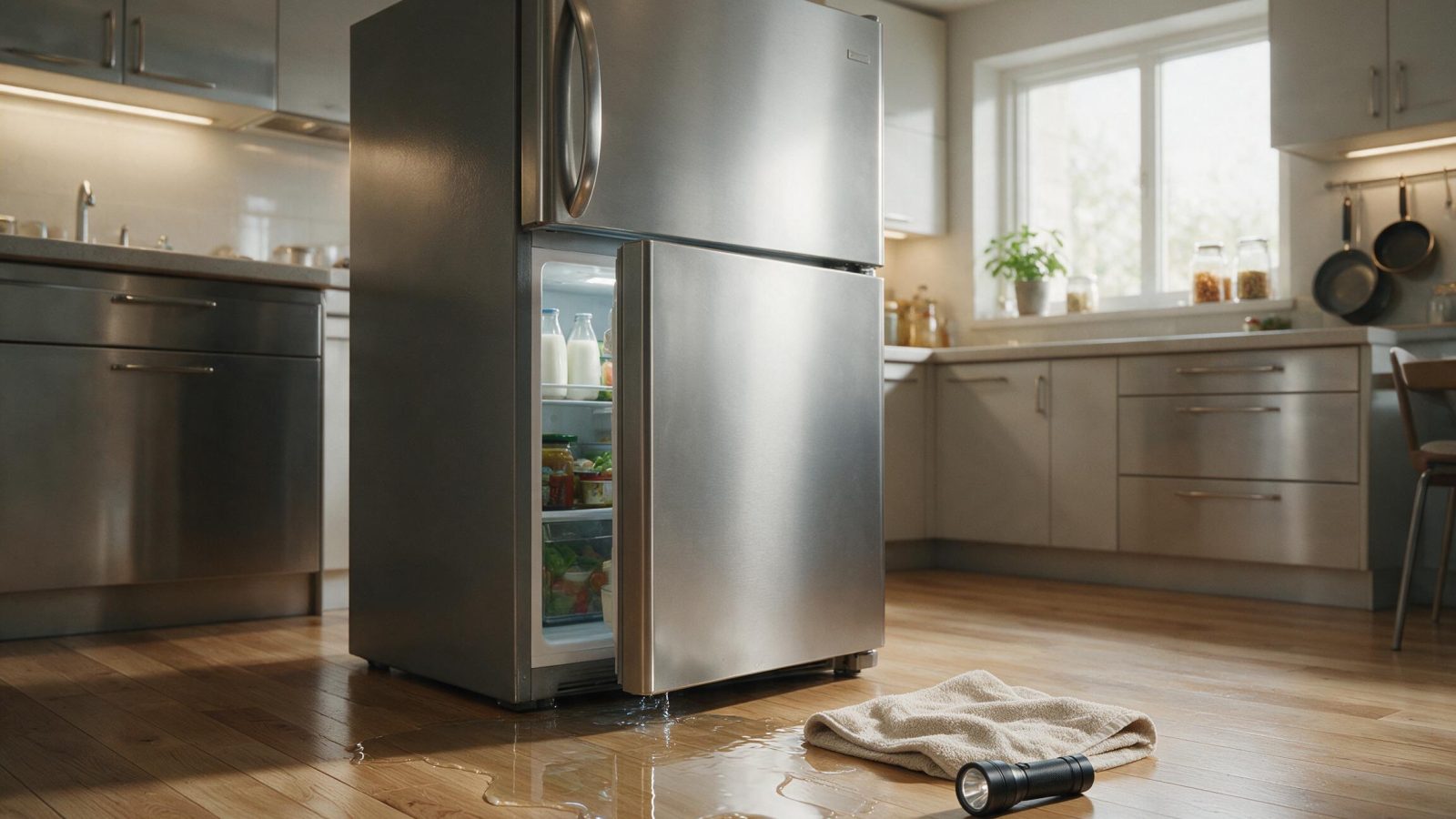
Water around a GE refrigerator can come from the plumbing system, defrost drainage, condensation, the dispenser, or an internal reservoir. The location and timing of the puddle usually reveal which system to inspect first.
A refrigerator leak is easier to diagnose when you resist the urge to immediately pull the appliance apart. First determine where the water appears and what the refrigerator was doing just before it appeared.
A puddle behind the refrigerator suggests something different from water under the crisper drawers. A leak that occurs only after dispensing water points toward the dispenser circuit. Water that appears once or twice a day can correlate with automatic defrost drainage.
If water is near an electrical connection, disconnect power before investigating further.
Use dry paper towels around likely areas and monitor where moisture returns.
Common leak zones include:
This simple mapping step can prevent replacing an inlet valve when the real problem is a clogged defrost drain.
During automatic defrost, frost melts and water should travel through a drain tube to a pan beneath the refrigerator.
If that drain becomes restricted, water can freeze inside the freezer or spill into the cabinet and eventually onto the floor.
GE specifically notes that on some side-by-side models, ice under the bottom freezer basket plus periodic water on the floor can indicate a clogged defrost drain tube.
Do not force wire, knives, or sharp tools into the drain. The correct clearing method depends on the model and access design.
Water or ice under vegetable drawers can have several causes depending on refrigerator style.
On some GE side-by-side designs, a leaking water storage tank can allow water to collect under the fresh-food bins. A blocked defrost drain can create a similar symptom in other configurations.
Remove the drawers and look for where moisture first appears. If water leaks only while the dispenser is being used, the internal reservoir or tubing becomes more likely.
Pulling the refrigerator forward can stress a copper or plastic water line. Connections can also loosen over time.
Inspect the line from the household shutoff valve to the refrigerator for:
Dry each fitting before testing so you can see fresh moisture.
Do not overtighten plastic fittings; overtightening can damage them and create a worse leak.
A filter that is not fully seated, is the wrong type, has damaged seals, or was installed incorrectly can leak.
If the leak started immediately after a filter change, revisit the installation before assuming another component happened to fail at the same time.
Check for:
Follow the model-specific filter installation procedure. Some systems also need air purged from the water circuit after replacement.
The inlet valve controls household water entering the refrigerator. It may feed the dispenser, ice maker, or both.
A valve can leak externally at a fitting or internally by failing to close completely.
Possible symptoms include:
Electrical and plumbing access is involved, so replacement is a better professional repair if you are not experienced with appliance water systems.
A few drops immediately after dispensing can be residual water in the outlet tube. Persistent dripping is different.
Air trapped in the water system after filter service can cause sputtering or delayed drips. A valve that does not seat properly, pressure problems, or dispenser-line issues can also contribute.
If the dispenser drips only after a recent filter change, purge the system according to GE’s instructions for the model before replacing parts.
Water can leak from the ice maker area if:
Inspect only accessible areas without forcing the mechanism. Water entering the freezer and immediately freezing can create an ice sheet that later causes fan or drawer problems.
Not every puddle comes from the plumbing system.
Warm humid air entering through a poor door seal can create excessive condensation. Moisture may collect around drawers, walls, or the bottom of the cabinet.
Check the gaskets and verify doors close completely. High humidity can magnify even a small sealing issue.
Defrost water normally reaches a pan near the compressor area, where heat and airflow help it evaporate.
A cracked, displaced, or overflowing pan can create water under the refrigerator. Pan design varies, and some are not intended for routine removal by the owner.
If the pan contains unusual amounts of water, find out why rather than simply emptying it. Excess water may be the downstream result of another leak.
Water behind refrigerator: supply line, rear fitting, inlet valve. Water under freezer basket: possible blocked defrost drain. Water under crispers: reservoir/tank, drain issue, condensation depending on model. Leak after filter change: filter seating, filter head, trapped air. Leak during ice fill: fill tube, valve, ice maker alignment. Drip at dispenser: residual water, trapped air, valve or line issue.
If the leak is active:
1. Shut off the refrigerator water supply if plumbing is involved. 2. Protect flooring with towels or a shallow tray. 3. Disconnect power if water is near wiring or electrical components. 4. Photograph the leak location before drying it. 5. Note whether the leak occurs during dispensing, ice making, or defrost. 6. Keep the model and serial information available.
These steps make diagnosis easier and reduce the chance of floor damage.
Request repair if the leak is inside the cabinet, recurs after the drain is safely cleared, originates from the inlet valve or internal reservoir, involves a cracked component, or cannot be isolated without removing panels.
Water problems should be corrected promptly because moisture can damage flooring, cabinetry, electrical parts, and insulation.
Tell the technician exactly where the first water appears and whether it correlates with the dispenser, ice maker, or defrost cycle. That is more useful than the size of the puddle alone.
Common categories include a blocked defrost drain, leaking supply line, inlet-valve connection, filter problem, internal water-system leak, or drain-pan issue.
Depending on the model, an internal water tank/reservoir leak, blocked drain, or condensation problem may be involved.
The filter may not be fully seated, its seals may be damaged, or air may remain in the water system. Recheck the model-specific installation instructions.
Yes. Defrost water can back up, freeze inside the freezer, and later escape onto the floor instead of reaching the drain pan.
If the leak is part of the pressurized water system, shutting off the supply is a sensible way to limit damage until the problem is repaired.
This article covers Ge Refrigerator Leaking Water: with practical checks you can run before booking a technician.
Need help now? Visit our services page or contact us.
Official manuals and support notes are available on GE owner support.
Remember: Ge Refrigerator Leaking Water: is easier to resolve when you capture the model number and when Ge Refrigerator Leaking Water: first appeared.
Write down the full model number before ordering parts. Board and sensor revisions can change which part number is correct.
A single power reset can clear a temporary fault, but repeated returns of the same code usually mean a physical cause remains.
Keep vents and filters clear between visits. Restricted airflow often mimics electrical or sensor failures.
If water, burning smells, or sparking are present, stop using the appliance and arrange a professional inspection.
A GE washer that will not drain may have a kinked hose, installation problem, clogged front-load pump filter, blocked pump, failed drain motor, or…
A GE washer may refuse to spin because the load is unbalanced, water has not drained, the lid or door is not locking, or…
Some vibration is normal during spin, but a GE washer that walks across the floor, bangs the cabinet, or repeatedly stops to rebalance needs…
Request a repair on our homepage booking form, or call us and we’ll help right away.