
Refrigerators naturally hum, click, gurgle, and change sound as fans, valves, refrigerant, and defrost components operate. A new or persistent scraping, grinding, or repeated click-start pattern deserves closer attention.
A refrigerator contains several moving and fluid-control components, so silence is not the normal standard. Fans speed up and slow down, refrigerant changes pressure, the ice maker fills, dampers move, and the cabinet expands and contracts as temperatures change.
The fastest way to diagnose a noisy GE refrigerator is to identify where the sound comes from, when it happens, and whether cooling performance changed at the same time.
Noise with normal temperatures is a different problem from noise accompanied by warming food.
Check both compartments. If the refrigerator is getting warm, the noise may be related to a fan obstruction, compressor starting problem, or another failure that affects cooling.
If temperatures are normal, start by matching the noise to the operating event.
A low hum is common when a compressor or fan is operating. An ice maker water valve can also buzz briefly while filling.
Buzzing becomes more suspicious when it is:
A water valve may buzz if the ice maker is calling for water but the supply is off or restricted. If the refrigerator was recently installed or the water line was shut off, verify the supply before replacing the valve.
Single clicks can be normal. Relays, valves, dampers, and ice-making components can all create clicking sounds.
Repeated clicking every few minutes with the compressor failing to remain running is more concerning. That pattern may involve:
If the cabinet temperature is rising at the same time, disconnecting and repeatedly reconnecting the refrigerator is not a repair. Electrical diagnosis is appropriate.
A refrigerator can transmit normal mechanical vibration into nearby objects.
Before opening the appliance, check whether the sound comes from:
Pull the refrigerator slightly away from the wall if installation clearance permits and see whether the sound changes.
A persistent internal rattle can also come from a fan blade, loose panel, or mechanical component.
A rhythmic scrape that changes when a freezer door opens often points toward the evaporator fan area.
Ice may have accumulated around the fan blade because of:
The fan motor itself can also develop worn bearings.
Do not use a sharp tool to remove ice around the evaporator. The tubing behind the panel can be damaged easily.
A high-pitched sound can originate from a fan motor. Determine whether it comes from the freezer, fresh-food area, or machine compartment.
If the noise changes when a door switch is pressed, that can help identify an evaporator fan. If it is strongest near the lower rear area, the condenser fan or compressor area may be involved.
Fan bearings often become noisier before the motor stops completely.
Cabinet liners and internal components expand and contract as temperatures change. This can create occasional pops or cracking sounds.
Defrost cycles can make these sounds more noticeable because component temperatures change quickly.
An occasional pop without any cooling problem is generally less concerning than constant mechanical grinding or repeated compressor start attempts.
Refrigerant moving through tubing can sound like gurgling, boiling, or flowing liquid. Defrost water draining toward the pan can create similar sounds.
These noises are often normal if they occur periodically and there is no water leak or temperature problem.
If gurgling is accompanied by water on the floor, investigate the drain system and water connections separately.
An ice maker can produce sounds that surprise homeowners because the noises happen even when no one is using the refrigerator.
Normal events may include:
Grinding or repeated clicking when dispensing can indicate frozen clumps, a jammed auger, or mechanical damage. Remove obvious loose ice only according to the owner’s manual; do not force a stuck mechanism.
Compressors naturally hum and may sound different as load changes. Some modern compressors vary speed.
Service is more appropriate when you hear:
Compressor replacement or sealed-system work is not a DIY repair.
1. Confirm refrigerator and freezer temperatures. 2. Note whether the sound happens during cooling, defrost, ice making, or dispensing. 3. Identify whether it is strongest at the top, freezer, fresh-food section, or rear/bottom machine area. 4. Remove bottles and objects that could vibrate. 5. Verify the refrigerator is level and not touching cabinetry. 6. Check for visible frost if the noise comes from a fan area. 7. Record the sound on a phone before scheduling repair; intermittent noises are easier to diagnose with a recording.
Request service if the noise is new and persistent, is accompanied by warming temperatures, sounds like fan blades striking ice, includes repeated compressor start-clicking, or comes from a motor that appears to be slowing or stopping.
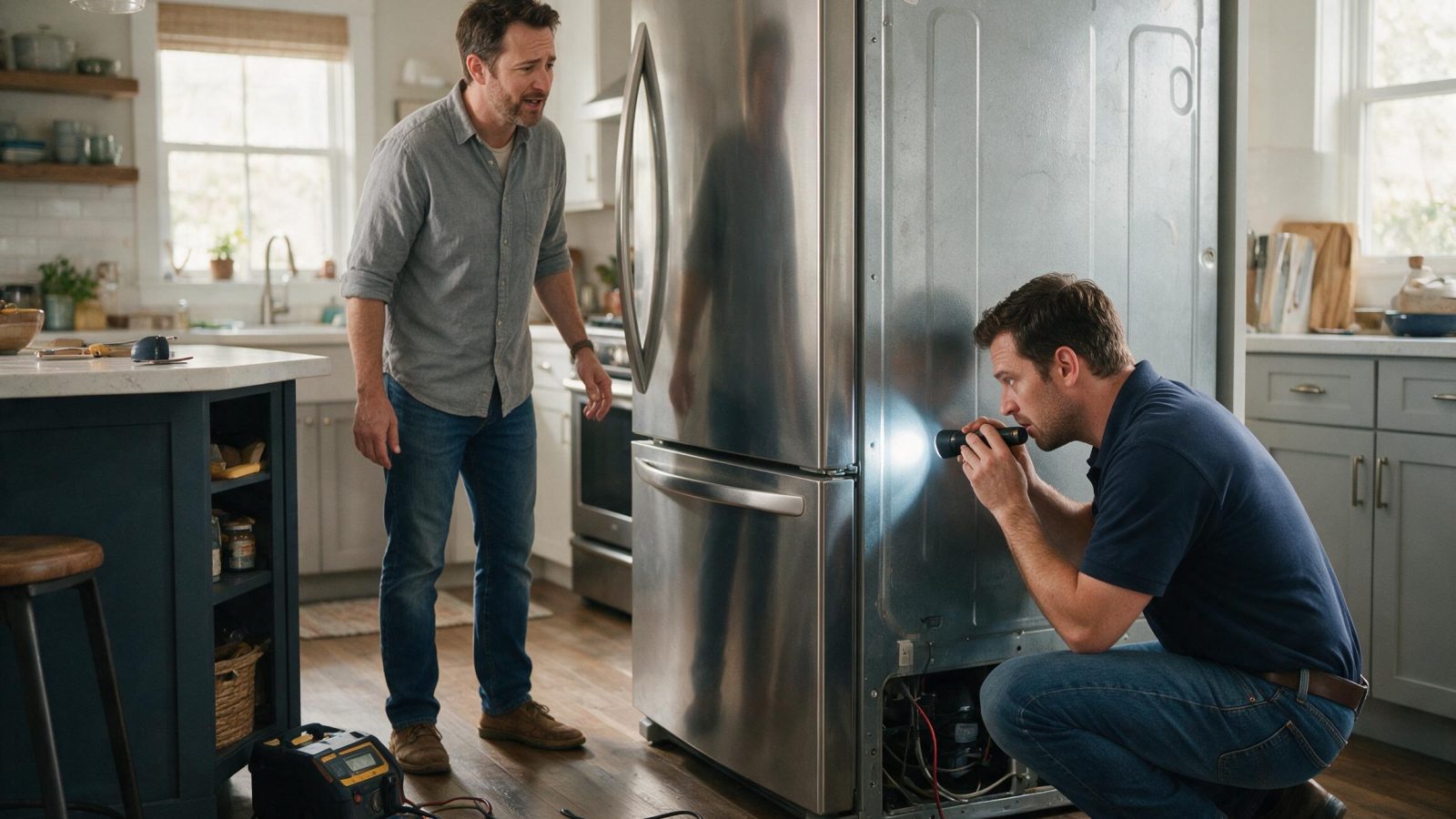
A technician can isolate fans individually, inspect frost patterns, verify compressor operation, and test the ice-making or dispenser mechanism.
When booking, describe the sound in plain language and when it occurs: “scraping only with freezer door closed” is more useful than simply saying “loud refrigerator.” Include a recording if possible.
Door position can help isolate a fan-related noise. On many refrigerators, opening a door changes fan operation or airflow. If a scraping or buzzing sound stops immediately when the freezer door opens and returns after the door switch is satisfied, the evaporator-fan area deserves attention. A noise that continues unchanged is more likely to come from the compressor, condenser fan, water system, or something vibrating outside the cabinet.
This is only an isolation clue, not a reason to bypass a door switch or operate the refrigerator with safety components defeated.
Possible sources include the compressor, a fan, or the ice maker water valve. A valve can buzz more noticeably if the water supply is restricted or shut off.
Occasional clicking can be normal. Repeated clicking paired with a compressor that cannot stay running may indicate a start or compressor problem.
Ice around the evaporator fan or a worn fan motor can cause scraping. Check for frost buildup and whether the sound changes when the door opens.
Occasional popping or cracking can result from thermal expansion and contraction, especially around defrost cycles.
If the noise suggests electrical arcing, severe mechanical contact, or the unit is overheating, disconnect power and arrange service. For ordinary operating noises, first identify the source and confirm temperatures.
This article covers Ge Refrigerator Making Noise: with practical checks you can run before booking a technician.
Need help now? Visit our services page or contact us.
Official manuals and support notes are available on GE owner support.
Remember: Ge Refrigerator Making Noise: is easier to resolve when you capture the model number and when Ge Refrigerator Making Noise: first appeared.
Write down the full model number before ordering parts. Board and sensor revisions can change which part number is correct.
A single power reset can clear a temporary fault, but repeated returns of the same code usually mean a physical cause remains.
Keep vents and filters clear between visits. Restricted airflow often mimics electrical or sensor failures.
If water, burning smells, or sparking are present, stop using the appliance and arrange a professional inspection.
A GE washer that will not drain may have a kinked hose, installation problem, clogged front-load pump filter, blocked pump, failed drain motor, or…
A GE washer may refuse to spin because the load is unbalanced, water has not drained, the lid or door is not locking, or…
Some vibration is normal during spin, but a GE washer that walks across the floor, bangs the cabinet, or repeatedly stops to rebalance needs…
Request a repair on our homepage booking form, or call us and we’ll help right away.