
Long refrigerator cycles are not automatically a failure. Hot weather, recent loading, door openings, and modern variable-speed operation can increase run time. Constant running becomes more concerning when temperatures are wrong or the unit cannot reach its set point.
A refrigerator does not operate on a simple “ten minutes on, ten minutes off” schedule. Run time changes with room temperature, food load, door openings, defrost operation, compressor design, and the temperature selected at the control.
For that reason, the real question is not simply, “Is my GE refrigerator running a lot?” It is: Is it running a lot while maintaining normal temperatures, or is it running because it cannot satisfy the cooling demand?
That distinction separates normal high-load operation from a developing cooling problem.
A GE refrigerator may run for an extended period after:
Modern efficient compressors may also operate differently from older refrigerators, including longer low-output cycles.
If cabinet temperatures are normal and the compressor occasionally changes speed or cycles off, long operation is not necessarily abnormal.
Use a thermometer rather than judging by compressor sound alone.
If the refrigerator is around its intended temperature and the freezer is close to its target, the appliance may simply be meeting a high heat load.
If the compressor runs almost continuously and the compartments are still too warm, there is a cooling-efficiency problem to find.
A small gasket leak can create a large heat and humidity load over many hours.
Inspect:
Warm air entering the cabinet can also create condensation or frost, which further reduces efficiency.
Every long door opening replaces cooled cabinet air with warmer, more humid room air. The refrigerator must then remove both sensible heat and moisture.
If run time increased during a party, meal prep, grocery loading, or a period when children are frequently opening the door, monitor it again after normal use resumes.
Setting a refrigerator colder than necessary does not make food “extra safe”; it creates more work and may freeze items in the fresh-food section.
If the control was accidentally changed to an unusually cold setting, return it to the model’s recommended range and allow time for stabilization.
Avoid changing the setting repeatedly during the same day. Each change makes it harder to determine whether the refrigerator can reach a stable temperature.
Blocked vents increase run time because temperature sensors may see warm areas even while other shelves are cold.
Move food away from supply and return vents. Leave room around the freezer evaporator cover and avoid stuffing the refrigerator completely full.
Poor airflow is especially likely if one shelf is warm while another is unusually cold.
A defrost-system failure can slowly bury the evaporator in ice. At first, the refrigerator responds by running longer because less cold air can pass through the coil.
Eventually, the fresh-food section warms and the freezer may also lose performance.
If you see thick frost rather than a light, even cold surface, investigate the defrost system rather than assuming the compressor is worn out.
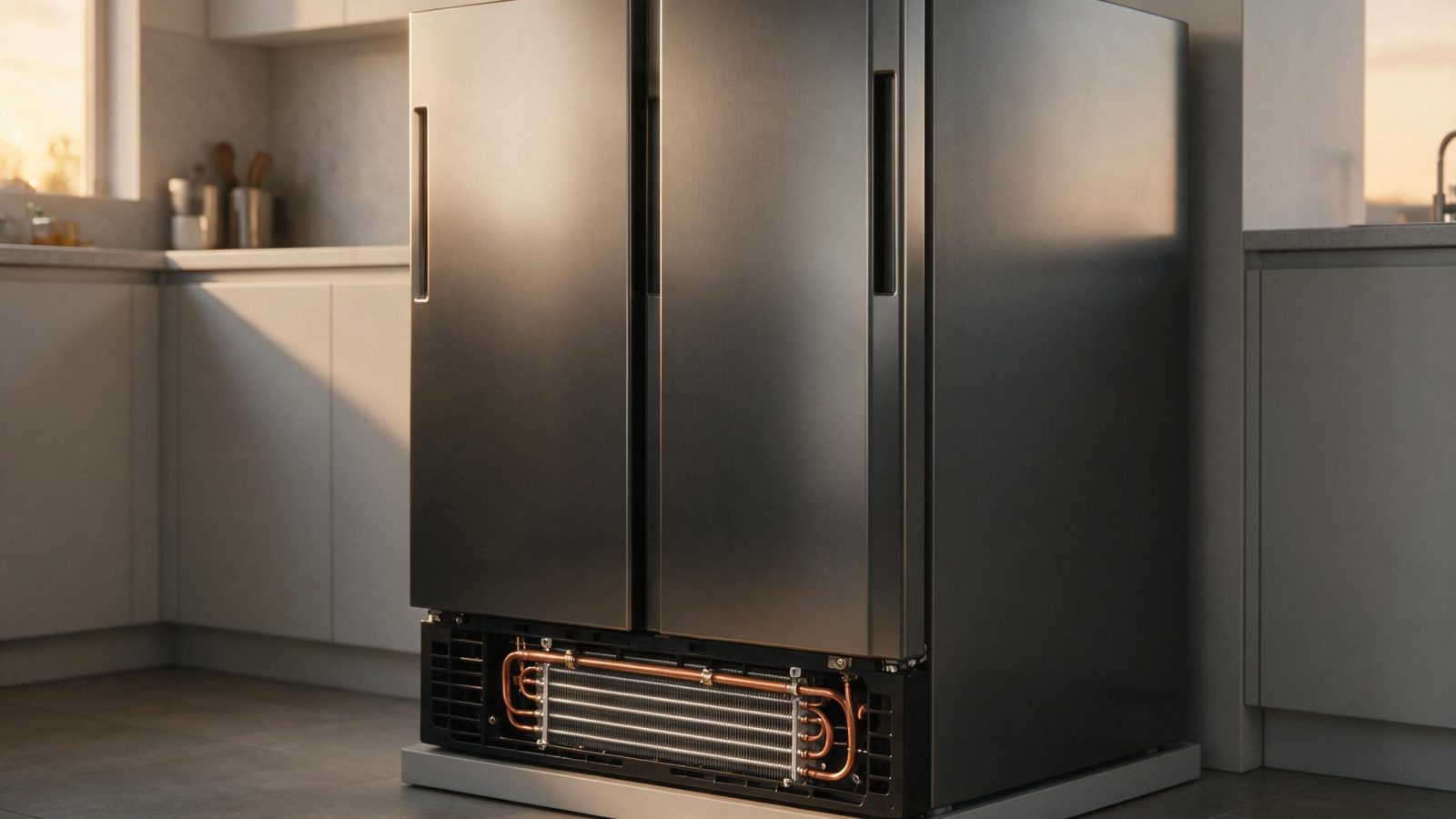
The refrigerator has to release the heat it removes from inside the cabinet. Restricted condenser airflow raises operating pressure and makes the compressor work longer.
Depending on model design, check for dust, pet hair, blocked grilles, a stalled condenser fan, or inadequate exterior clearance.
Disconnect power before cleaning around electrical and moving components.
A refrigerator installed next to an oven, in direct sunlight, inside tight cabinetry, or in a very hot garage faces a much larger heat load.
GE support documentation notes that very high or very low ambient temperatures can affect refrigerator performance. Model-specific installation requirements should always be followed.
If the problem appears only during extreme weather, installation conditions are an important clue.
Electronic refrigerators use thermistors and control logic to decide when to run fans and the compressor.
If a sensor reports a warmer temperature than actually exists, the control may continue requesting cooling. A stuck relay or control-board problem can also create abnormal operation on some designs.
Before replacing an electronic board, verify actual temperatures, sensor values, door inputs, and other system conditions. Control boards are often blamed for problems caused elsewhere.
If the refrigeration system is losing capacity, the control may never see the target temperature.
Possible causes include:
A compressor running continuously while only a small portion of the evaporator frosts is a classic reason to move toward sealed-system diagnosis.
Likely normal: temperatures are correct, doors seal, no unusual frost, and operation increased after a known heat load. Needs attention: temperatures are rising, compressor never seems to rest, frost is accumulating, condenser area is unusually hot, or the unit is making repeated start-click sounds.
Energy use is another clue, but avoid judging a refrigerator solely from sound. Variable-speed fans and compressors can be quieter or operate longer than older designs.
Schedule a diagnosis if the refrigerator runs almost continuously for an extended period and cannot maintain temperature, or if you find heavy frost, fan failure, repeated compressor clicking, abnormal heat, or evidence of a sealed-system problem.
The technician should test the cooling system rather than simply replacing a thermostat or board based on run time alone.
Provide the model number, current refrigerator/freezer temperatures, room temperature, and whether there is frost on the freezer wall. Those details help separate load-related operation from an actual failure.
It can be under high load or with certain efficient compressor designs. The key is whether the refrigerator maintains the correct temperatures without abnormal frost or noise.
Yes. Warm air leaking through a damaged or poorly seated gasket increases cooling demand and can cause longer cycles.
Restricted heat rejection can increase run time on models where the condenser area is serviceable and airflow is impaired.
A large load adds heat, and prolonged door opening adds warm, humid air. The refrigerator may need several hours to pull the cabinet back down to temperature.
Not necessarily. Airflow, defrost, door sealing, sensors, installation conditions, or a large heat load may produce the same symptom.
This article covers Ge Refrigerator Running Constantly: with practical checks you can run before booking a technician.
Need help now? Visit our services page or contact us.
Official manuals and support notes are available on GE owner support.
Remember: Ge Refrigerator Running Constantly: is easier to resolve when you capture the model number and when Ge Refrigerator Running Constantly: first appeared.
Write down the full model number before ordering parts. Board and sensor revisions can change which part number is correct.
A single power reset can clear a temporary fault, but repeated returns of the same code usually mean a physical cause remains.
Keep vents and filters clear between visits. Restricted airflow often mimics electrical or sensor failures.
If water, burning smells, or sparking are present, stop using the appliance and arrange a professional inspection.
If a GE top-load washer fills normally and then sits still, the water-supply system is probably doing its job. The next step is to…
A washer that will not start can be completely dead or powered but unable to begin a cycle. Separate those two symptoms first, then…
A GE dryer can tumble normally and still produce no heat. Electric and gas models share some checks—cycle selection and airflow—but their heat sources…
Request a repair on our homepage booking form, or call us and we’ll help right away.